
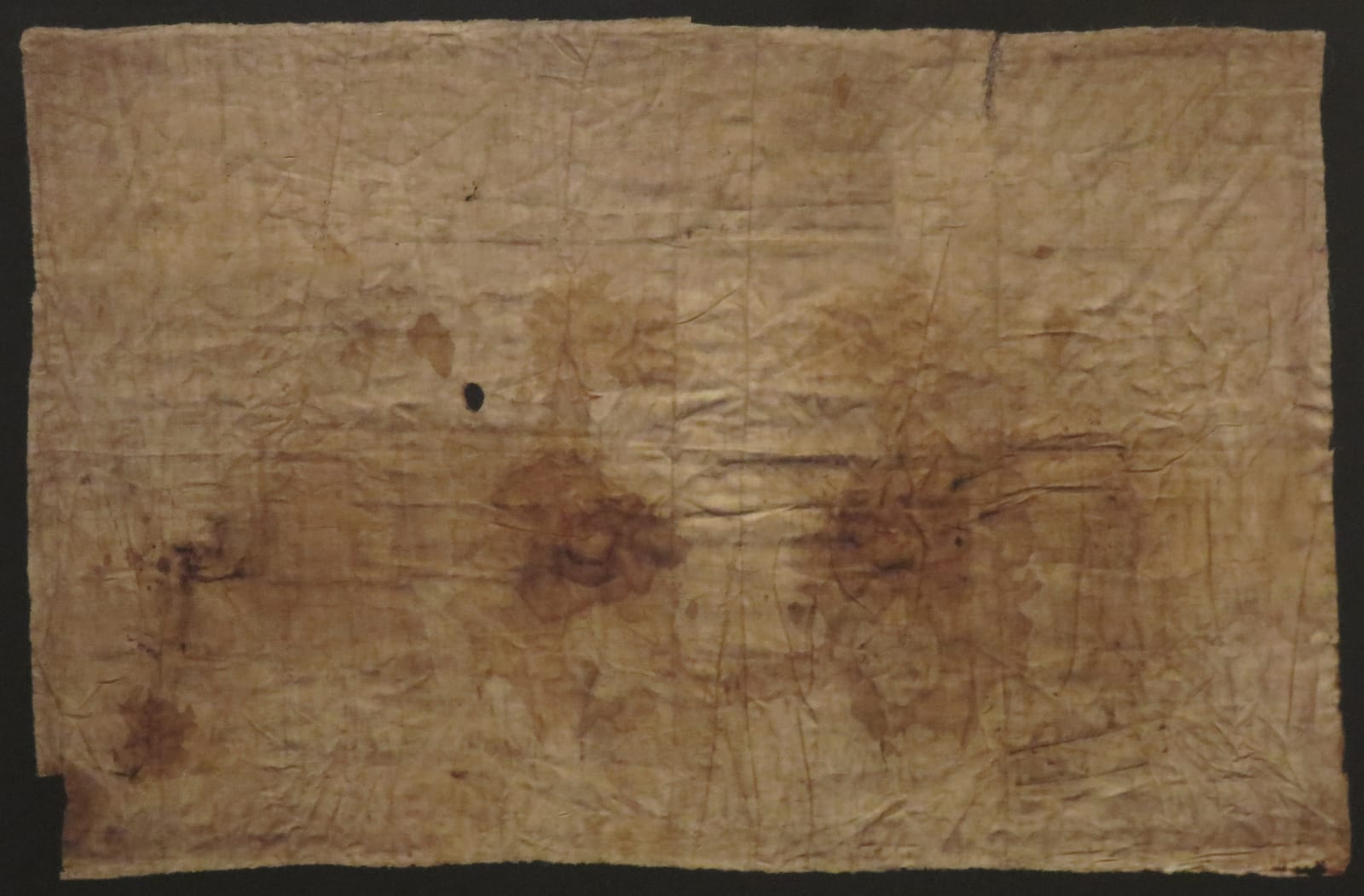
The Sudarium of Oviedo is a small piece of linen, approximately 84 × 53 cm, stained with what has been identified as human blood (type AB), bodily fluids, and signs of pulmonary oedema. It has been documented in Spain since around AD 614 — when, according to tradition, it was carried from Jerusalem to Spain in advance of the Persian conquest — and at Oviedo since 840, where it rests in the Cámara Santa of the cathedral.
The Sudarium has been the subject of intensive forensic study since the 1980s by the Spanish Centre for Sindonology. The blood and serum stains form a precise pattern consistent with a cloth wrapped about the face of a corpse that had been hanging on a cross for some hours; bone and tissue analysis identified the bridge of the nose and the position of the chin. The bloodstain pattern matches, point-for-point and in proportions, the wounds on the face of the Shroud of Turin — strongly suggesting both cloths covered the same person. The blood type, AB, also matches the Shroud. The Sudarium is exposed for public veneration three times a year — Good Friday, the feast of the Triumph of the Cross (September 14), and its octave.