
In June 1453, during a war between the Duchy of Savoy and France, mercenaries looted the abbey-church of Exilles in the Susa Valley west of Turin. Among the spoils was a precious gilded monstrance — taken without the soldier realising it still contained a consecrated host. The soldier brought the package to Turin and sold it to a local merchant, who placed it in the saddlebag of his mule.
As the merchant led the mule through the Piazza del Grano on June 6, 1453, in front of the church of St. Sylvester, the mule suddenly stopped and refused to move. The saddlebag tore open of itself; the monstrance levitated from it and rose into the air, the consecrated host visible within the broken crystal. There it remained, suspended high above the crowd, for over an hour.
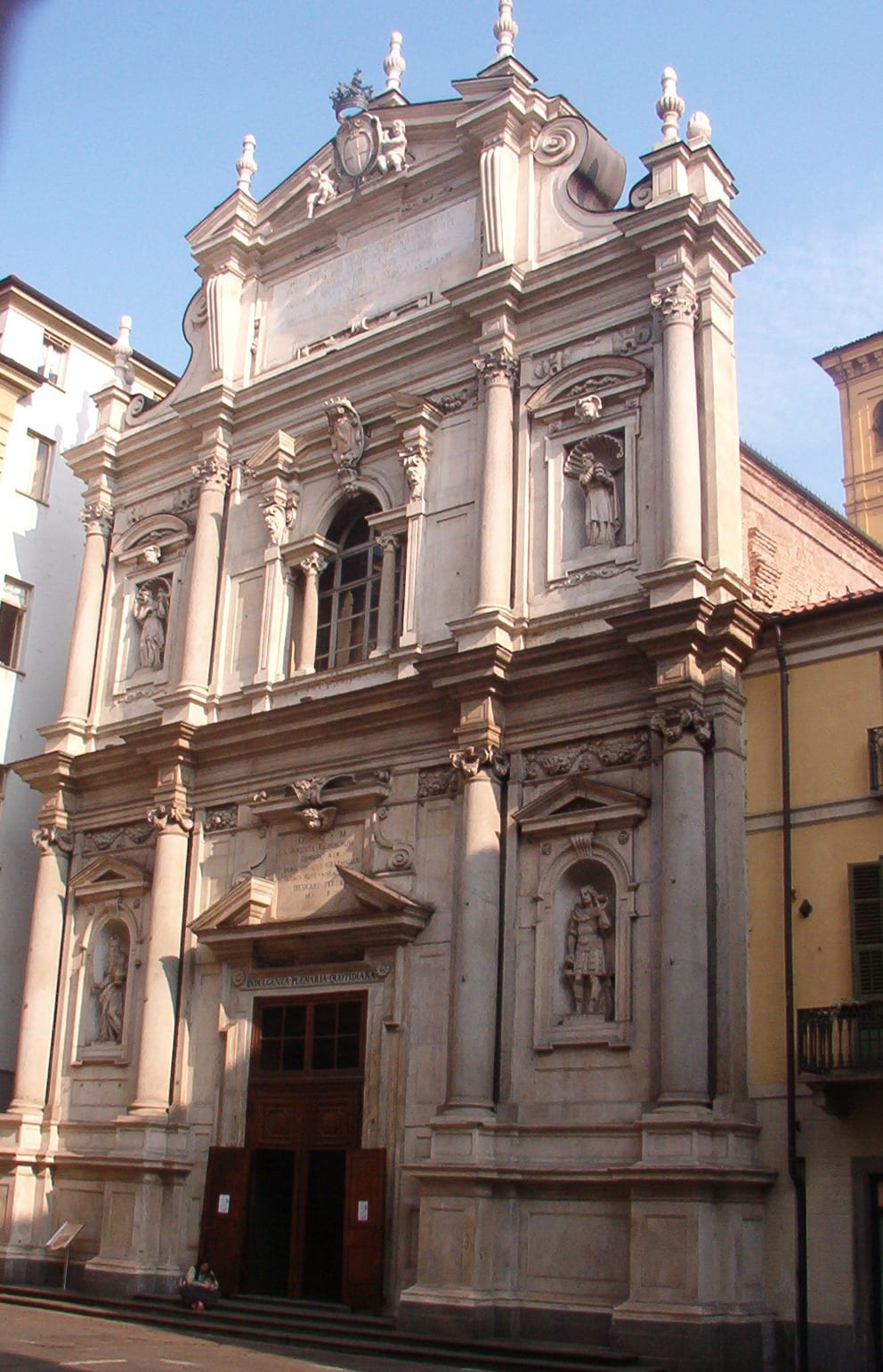
Bishop Ludovico of Romagnano was summoned. Carrying a chalice up the steps of the nearby church, he asked the host to descend; it slowly came down into the chalice. Bishop Ludovico carried it to the Cathedral. Duke Ludovico of Savoy founded the great church of Corpus Domini on the site of the levitation, where the relic has been venerated ever since. Pope Pius IX confirmed the public cult; the column on the Piazza marks the exact spot where the monstrance rose.