
A priest named Heinrich Otto, celebrating Mass on a small altar in the chapel of Walldürn in 1330, knocked over the chalice after the consecration. The consecrated wine — Christ's blood — spilled across the linen corporal. As Heinrich looked in horror, the spreading stain formed itself into an image: at the centre, the head of the crucified Christ crowned with thorns; around it, eleven smaller heads of Christ in the manner of the Vera Icon.
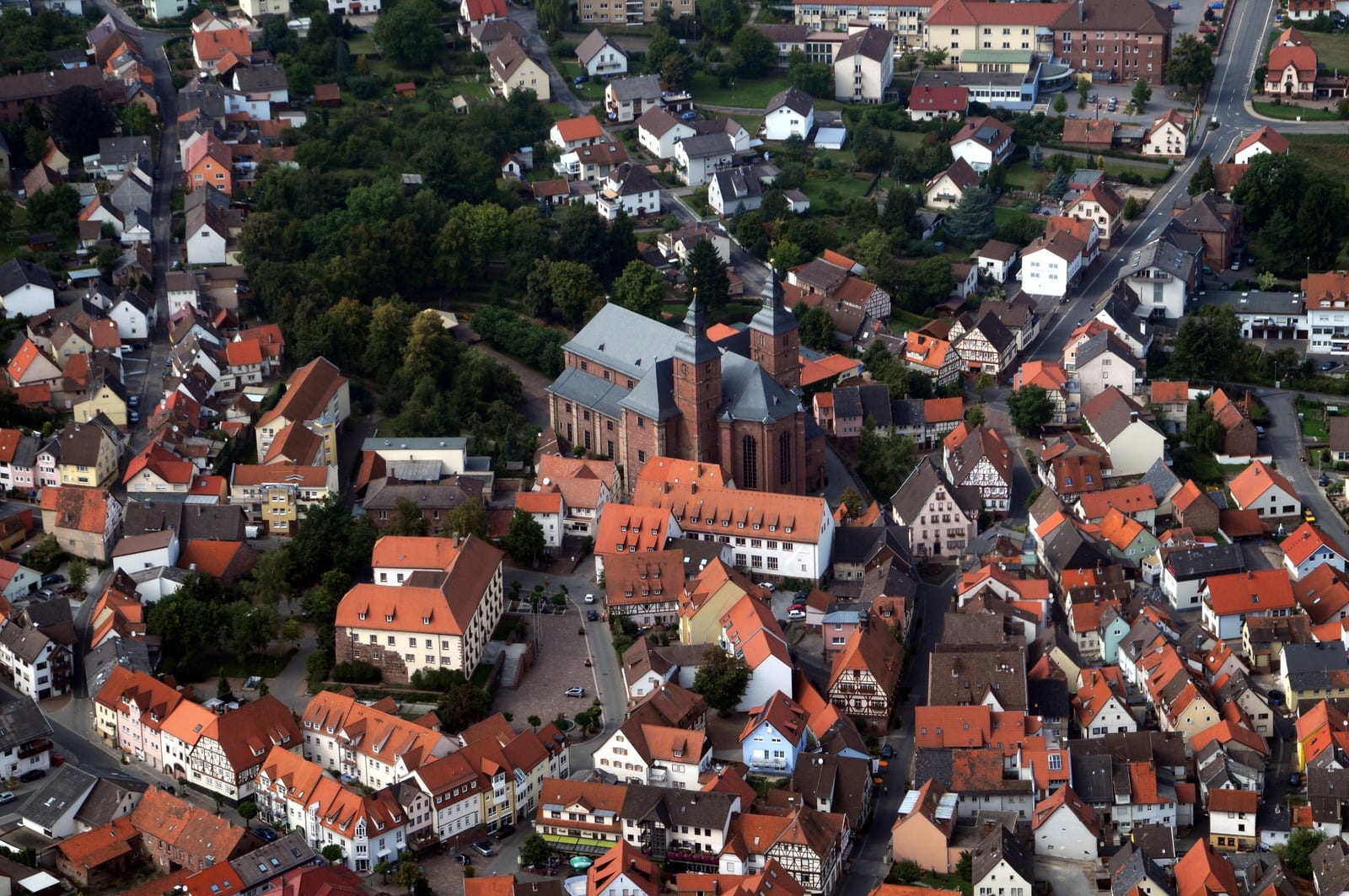
Frightened of his own carelessness, Heinrich hid the corporal beneath the stone of the altar. On his deathbed years later he confessed; the bishop ordered the altar opened and the corporal found in its original state. The relic, in a great silver reliquary, has been the centre of a pilgrimage to Walldürn that since the 14th century has drawn German Catholics by the tens of thousands each year. Pope Eugene IV approved the cult in 1445; Pope Pius VI elevated the church to a basilica in 1962. The annual procession of the Holy Blood (Heilig-Blut-Wallfahrt) still draws hundreds of thousands.