
MIRACULOUS MIRACLES™

Saint — Bernard of Clairvaux

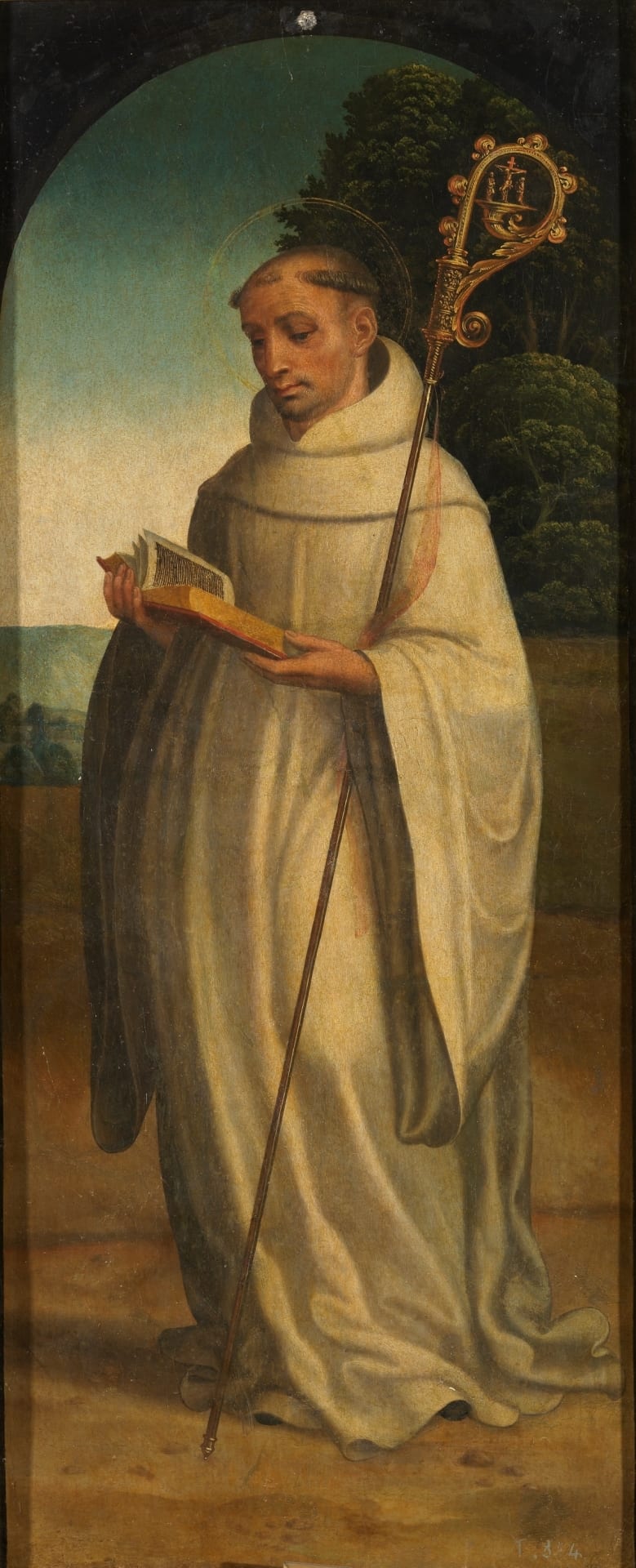
St. Bernard of Clairvaux
AD 1090, Fontaine-lès-Dijon — August 20, 1153, Clairvaux
Doctor Mellifluus — the Honey-Sweet Doctor
Cathedral of Troyes, France
Feast
August 20
Canonized
Canonized 1174 (by Alexander III); Doctor 1830 (by Pius VIII)
Doctor of the Church
Yes
Life

Bernard was born to the Burgundian nobility and might have inherited a brilliant secular future. At twenty-two, after the death of his mother, he persuaded thirty kinsmen and friends — including all four of his brothers — to enter with him the strict new monastery of Cîteaux, which had been founded fourteen years earlier. The arrival of this band of young noblemen rescued the struggling Cistercian movement and made its future.

Three years later, at twenty-five, he was sent with twelve companions to found a daughter house at Clairvaux ('Clear Valley') in Champagne. He was abbot there for the rest of his life. From this remote monastery — through preaching, the most extensive correspondence of any 12th-century figure, and the force of personal sanctity — he became the most influential man in Europe. He preached the Second Crusade at Vézelay (1146), composed the Rule of the Knights Templar, settled the papal schism of 1130–38 in favour of Innocent II, and saw a former Cistercian disciple elected Pope Eugene III (1145).

His writings — Sermons on the Song of Songs, On Loving God, On Consideration (a manual for Pope Eugene III), the Steps of Humility — combined doctrinal precision with extraordinary tenderness. His Marian piety shaped centuries of Catholic devotion: the prayer Memorare is traditionally attributed to him. Pius VIII declared him Doctor of the Church in 1830; Pius XII, on the 800th anniversary of his death, issued the encyclical Doctor Mellifluus (1953).

Miracles & Phenomena
  • Sermons on the Song of Songs (begun 1135)

    Eighty-six sermons on the first two chapters of the Song of Songs — the longest continuous mystical commentary in medieval literature, foundational to Cistercian spirituality and to all subsequent Catholic bridal mysticism.

  • The Preaching of the Second Crusade

    March 31, 1146

    At the Council of Vézelay in March 1146, Bernard preached the Crusade with such effect that, as the chronicler reports, the supply of cloth crosses was exhausted before the end of the day; he ripped his own habit to make more. The Crusade's military failure broke him.

  • Healings and Conversions Across France and Germany

    His preaching tours produced great numbers of monastic vocations — Clairvaux's daughter houses multiplied to 68 in his lifetime — and accounts of physical healings at his hands are recorded in his Vita Prima, written by his secretary Geoffrey of Auxerre.

Relics
  • Bodily relic
    Skull of St. Bernard
    Cathedral of Troyes, France

    His original tomb at Clairvaux was destroyed in the French Revolution. His skull was rescued and is preserved in a reliquary at the cathedral of Troyes.

  • Object
    Personal items
    Bar-sur-Aube and various Cistercian foundations
Iconography
  • Bernard and the 'Lactation'

    A famous medieval iconographic type — the Virgin Mary appears to Bernard at prayer and presses drops of her own milk from her breast to his lips, symbol of his nourishment in Marian theology. Painted by Murillo, Alonso Cano, and many Spanish masters.

  • Bernard with the Bee-Hive

    His attribute (paired with St. Ambrose) for his honey-sweet eloquence — often a beehive at his feet.

Prayers to This Saint
  • Memorare

    A petition to the Blessed Virgin that no one who has ever sought her intercession has been unaided. Made popular by St. Bernard of Clairvaux.

    Read the full prayer →
Patronages
The Cistercian OrderBeekeepersWax refinersBurgundyGibraltar
Sources & Further Reading