
MIRACULOUS MIRACLES™

Saint — Blaise

St. Blaise
3rd century, Sebaste, Armenia — c. 316, Sebaste, Armenia (martyred under Licinius)
Bishop and Martyr — Healer of Throats
Church of St. Blaise, Dubrovnik, Croatia
Feast
February 3
✠ MartyrTorn with iron wool-combs and beheaded at Sebaste under the persecution of Licinius → The Martyrs
Life

Blaise was bishop of Sebaste in Armenia and was put to death there under Licinius, about the year 316. That much is the constant tradition of both East and West, and his cult is attested early and very widely. The detailed Acts are late — eighth century — and cannot carry the weight the popular story puts on them.

The story is the reason everyone knows him. Arrested and led to the governor, he is said to have healed on the road a boy who was choking to death on a fishbone, and to have told a poor woman whose pig a wolf had carried off where to find it. In prison she brought him candles, and to this day the blessing is given with two candles, tied in a cross and held to the throat: 'Through the intercession of St. Blaise, bishop and martyr, may God deliver you from every disease of the throat and from every other illness.' It is one of the very few blessings of the Roman Ritual that ordinary Catholics still queue for by name, every 3 February.

The iron combs with which his flesh was torn were the tools of the wool trade, and made him its patron. Dubrovnik has kept him as its protector since 971, when tradition says he warned a priest of a Venetian fleet preparing a surprise attack; the city's festival of Sveti Vlaho on his feast has been held ever since and is inscribed on the UNESCO list of intangible heritage.

Miracles & Phenomena
  • The boy and the fishbone

    The healing on the road to prison from which the blessing of throats descends — first recorded in the late Acts, and the most widely practised saint's blessing in the Latin Church.

  • The warning to Dubrovnik

    971: by the city's tradition, the bishop appeared to the priest Stojko to warn that the Venetian fleet anchored offshore was preparing to take the city. Ragusa held, and made him its patron.

Relics
  • Bodily relic
    Relics of St. Blaise
    Maratea, Italy; Dubrovnik Cathedral; Taranto

    The principal Western relics are at Maratea in Basilicata, where a colossal statue of the Redeemer stands over the saint's basilica; Dubrovnik keeps the reliquary of his head, hands and throat, carried in procession every 3 February.

Iconography
  • Bishop with crossed candles

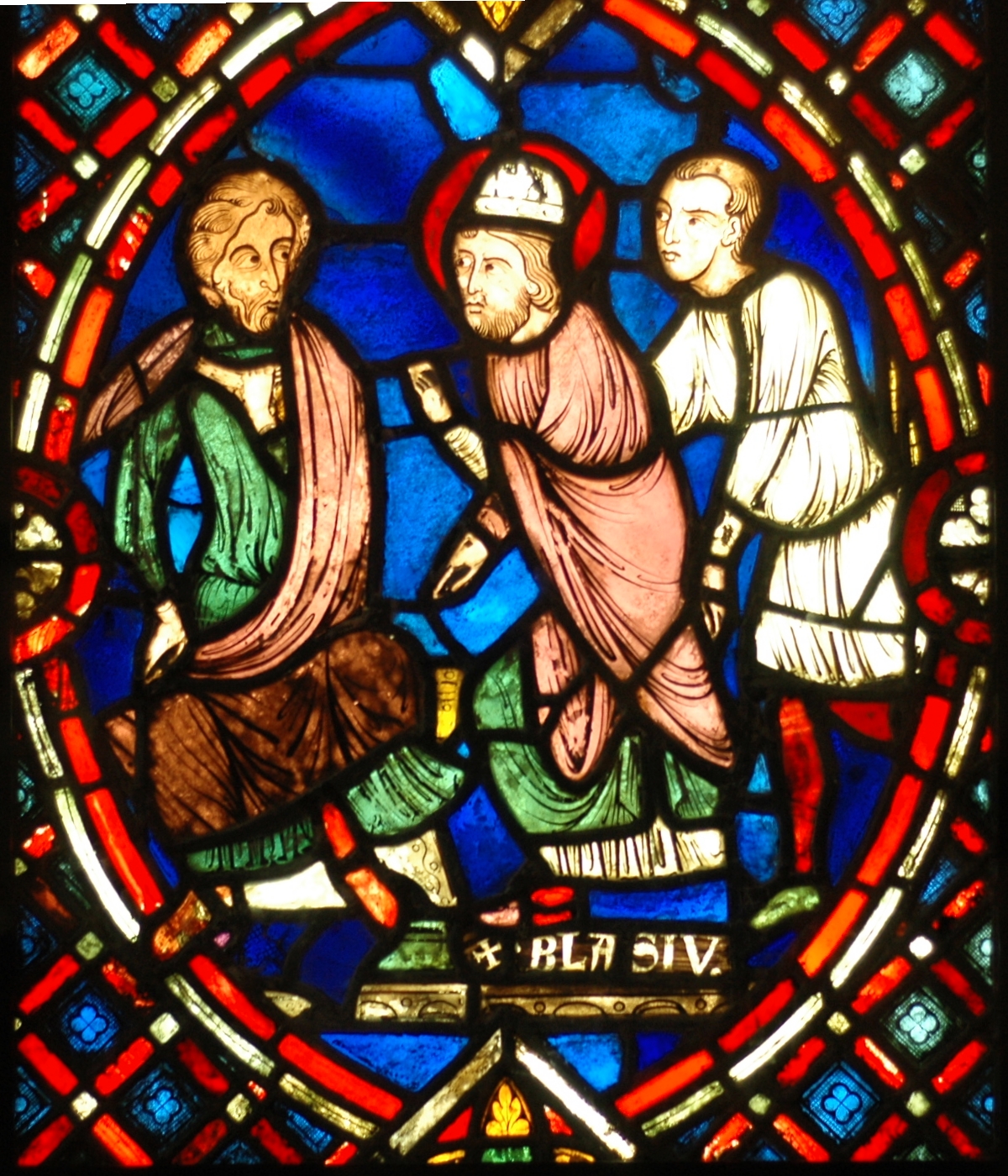
    In a bishop's mitre holding two candles crossed at the throat, sometimes with an iron comb at his feet, sometimes with the pig of the poor woman's story.

Prayers to This Saint
Patronages
Throat ailmentsWool-combersDubrovnikVeterinariansSufferers from choking