
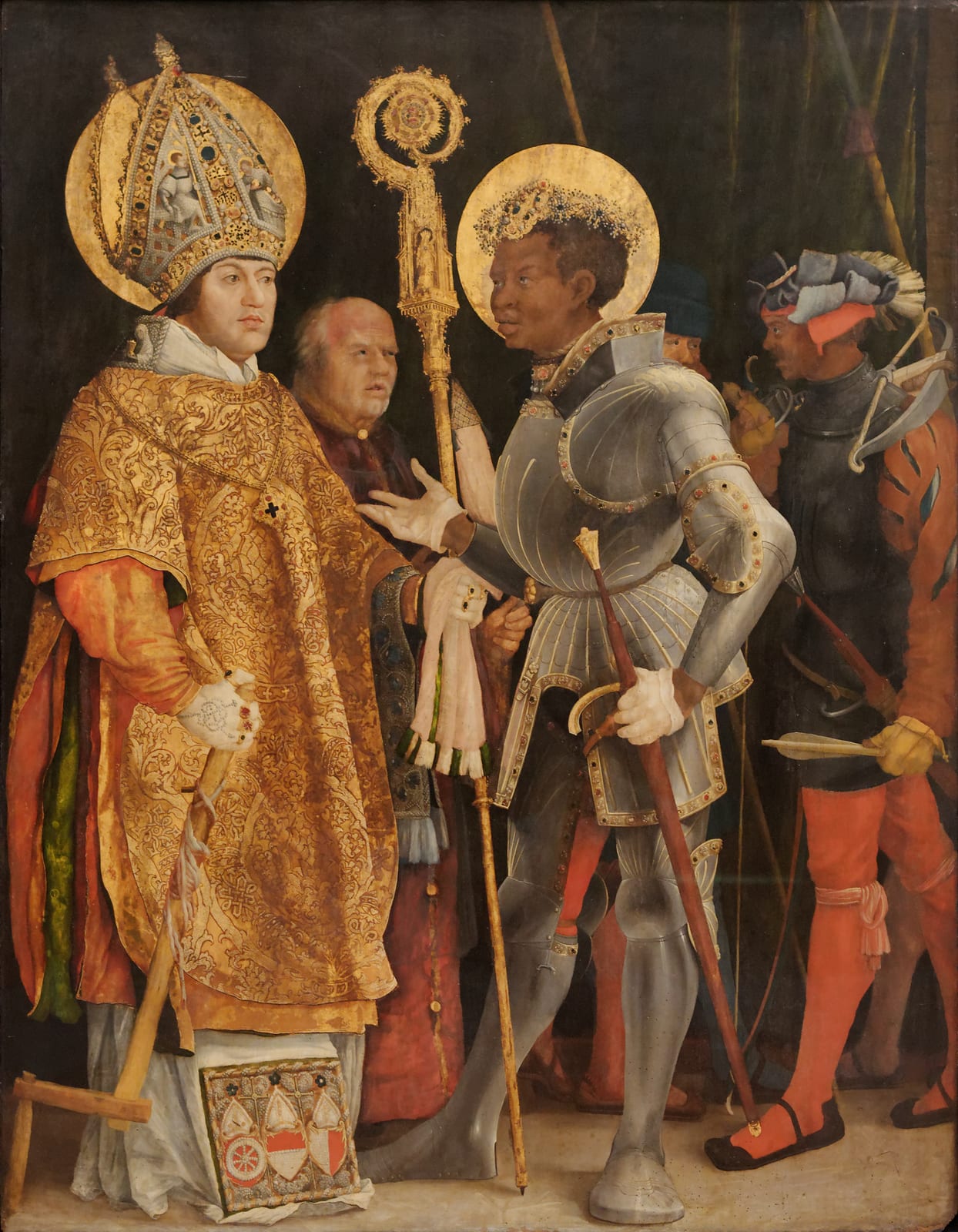
Erasmus was a bishop who died at Formia on the Italian coast in the persecution of Diocletian, about 303; the Roman Martyrology records him and Gregory the Great mentions his relics at Formia in the sixth century. Everything else told of him — a flight to Mount Lebanon, a raven that fed him, an interrogation before the emperor himself — belongs to a legendary passion written centuries later.
Sailors took him for their own along the Tyrrhenian coast, and it is to them that he owes both his popular name and his strangest attribute. The electrical discharge that plays blue at the mastheads before a storm breaks has been called St. Elmo's fire for centuries, and was read by seamen as his sign that the worst had passed.
The famous image of the saint with his intestines wound out on a windlass is almost certainly a misunderstanding. A capstan — the sailor's winch — was his emblem because he was the sailors' patron; a later age, looking at a bishop beside a windlass and knowing that martyrs died horribly, supplied the story to fit the picture. Nicolas Poussin painted the scene for St. Peter's in 1629 and fixed it in the Western imagination.