
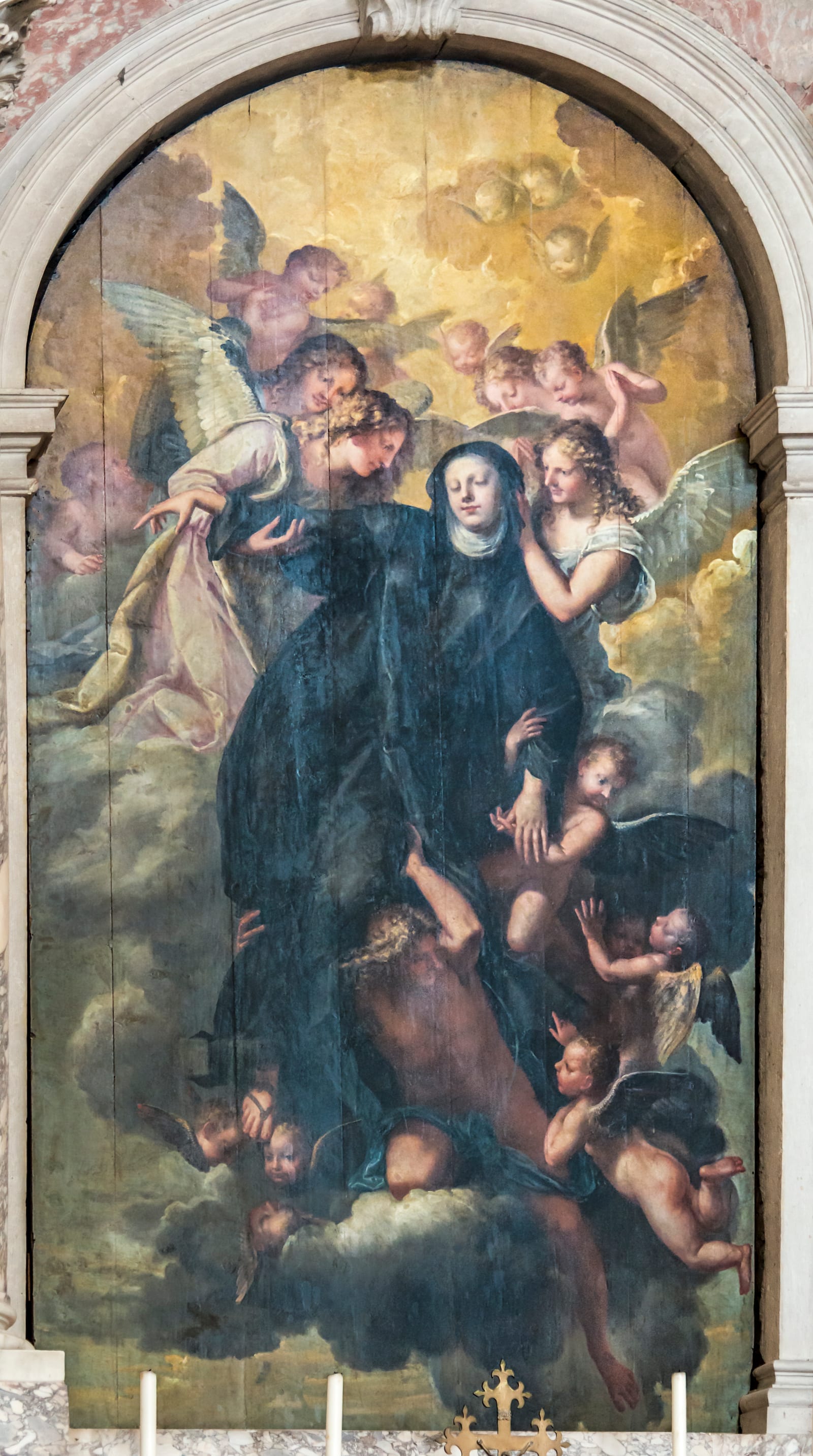
Gertrude was given to the abbey of Helfta as a child of five — an oblate, probably orphaned. She was raised by Mechtilde of Hackeborn, formed in the most learned women's library of medieval Germany, and grew into a brilliant Latinist with a scholastic command of grammar, rhetoric, dialectic, and theology. At twenty-five, on January 27, 1281, a sudden encounter with Christ in the dormitory transformed her from (in her own words) a 'fastidious pupil of grammar' into the great mystical theologian of Helfta.
Her writings — the Legatus Divinae Pietatis ('Herald of Divine Loving-Kindness', a five-book record of her visions and teaching) and the four-book Exercitia Spiritualia ('Spiritual Exercises') — are the most theologically systematic of all the Helfta-era mystical works. She presents the Sacred Heart of Jesus as the central image of God's love for the soul: three centuries before the Visitation revelations to Margaret Mary Alacoque, the entire shape of modern Sacred Heart devotion is already there in Gertrude.
She died at Helfta on November 17, 1302. Pope Clement XII extended her feast to the universal Church in 1738 — an equipollent canonization. She is one of only three women in the calendar of the Western Church titled 'the Great' (alongside Mary the Mother of God and St. Teresa of Ávila, herself a great reader of Gertrude). The Spanish Crown made her patroness of the West Indies, and the Sacred Heart prayer attributed to her — 'Eternal Father, I offer Thee the most precious Blood of Thy Divine Son' — is said to release 1,000 souls from purgatory each time it is prayed.