
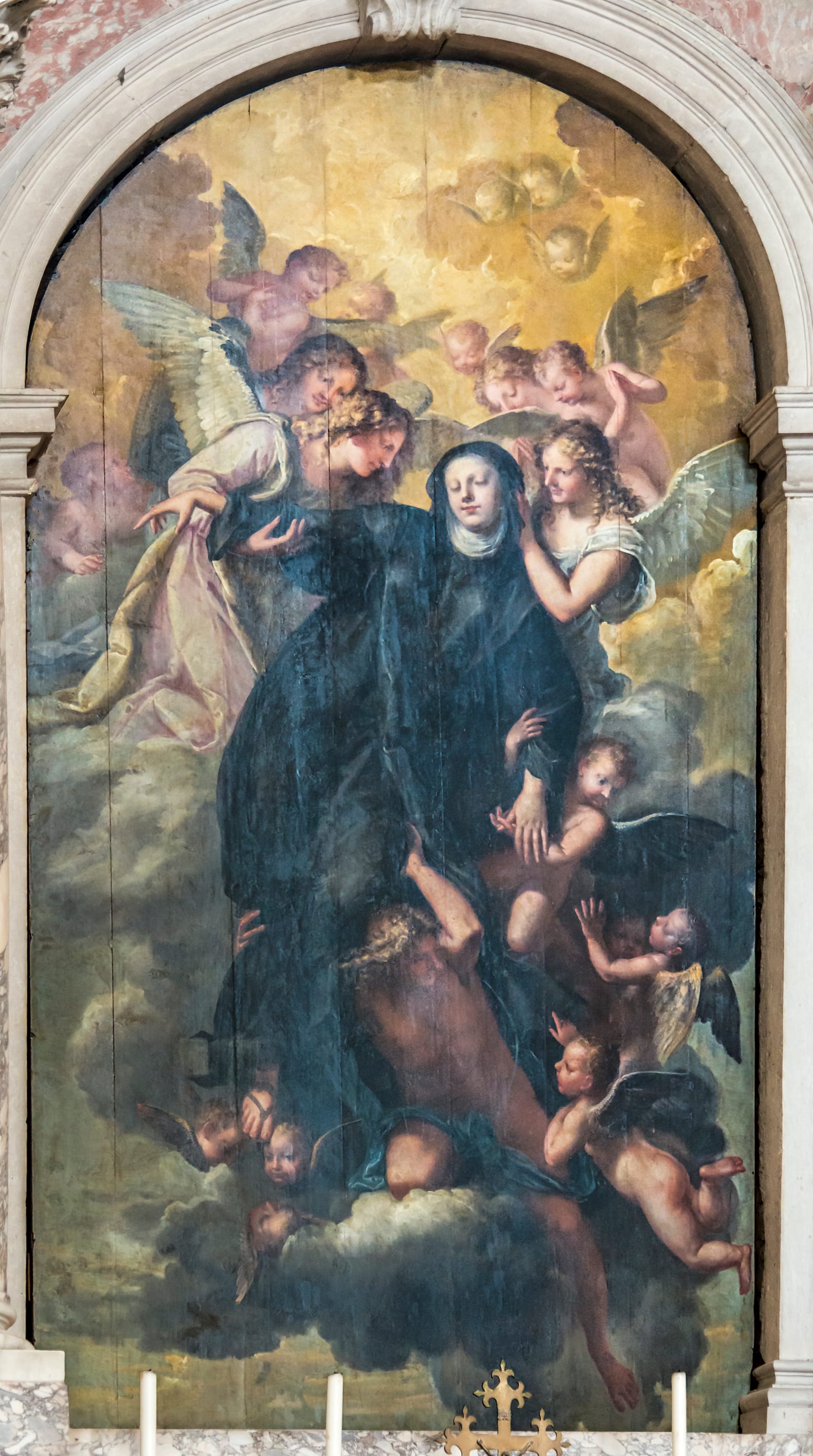
St. Gertrude (1256–c.1302) was given to the Cistercian monastery of Saint Mary at Helfta in Saxony as an oblate at the age of five. She was a brilliant student of grammar, rhetoric, music, and philosophy, completely absorbed in scholastic learning. On the evening of January 27, 1281, when she was twenty-five, she had her first vision of Christ — appearing to her as a young man, embracing her, and beginning a personal communion that would continue for twenty-one years.
Christ revealed to her the wound in his side as a fountain of mercy — the central theme of her writings. The Insinuations of Divine Piety and the Spiritual Exercises, dictated by her and circulated by the Helfta community, are foundational works of Sacred Heart theology and devotion — preceding the Margaret Mary apparitions by nearly four centuries. Gertrude is one of only six women honoured in the universal Roman calendar with the title 'the Great' (alongside St. Albert the Great as 'the Great'); her writings have been continuously printed since the 13th century. Pope Benedict XIV authorised her cultus for the universal Church in 1738.