
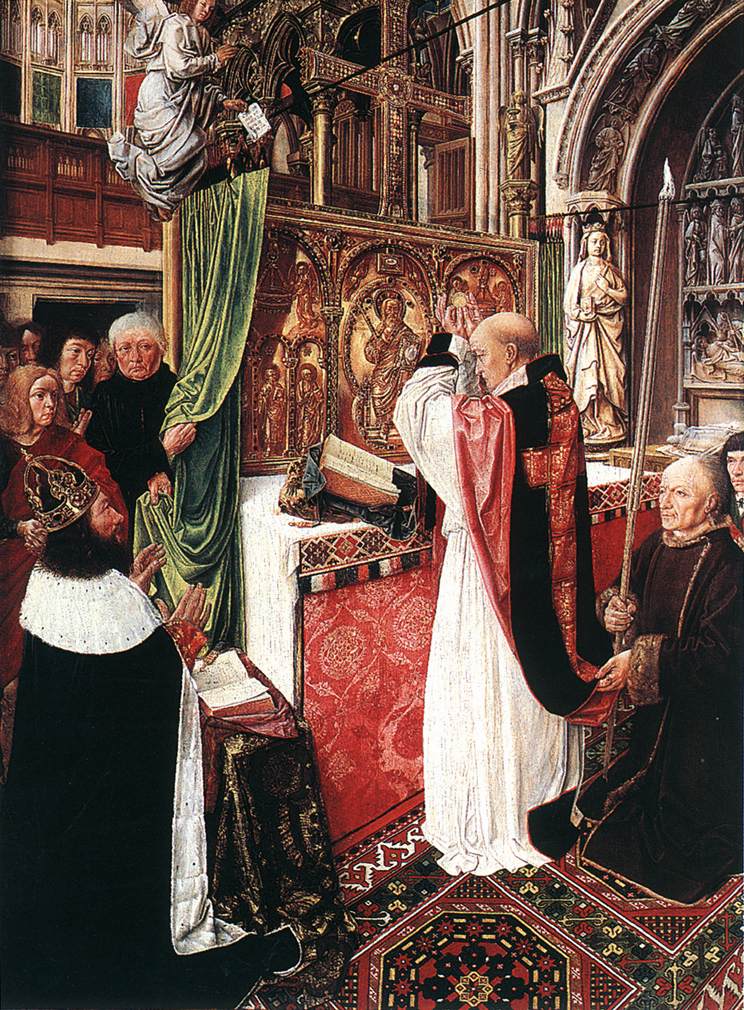
Giles was a hermit in the forest near the mouth of the Rhone in the late seventh century, and the abbey that grew around his cell became one of the four great gathering-points of the pilgrimage to Compostela. That is solid: the monastery is documented from the eighth century, the pilgrim traffic from the eleventh, and the carved west front of Saint-Gilles-du-Gard is among the finest Romanesque sculpture in France.
The legend that made him beloved is gentler than most. A hind that fed him with her milk in the wilderness was chased by the Visigothic king's huntsmen; Giles threw himself over her, and the arrow meant for the deer struck him in the hand and crippled him for life. The king, finding a hermit wounded in the act of protecting an animal, endowed a monastery on the spot. From that wound comes his patronage of cripples and beggars, and the odd geography of his cult: churches of St. Giles stand at city gates, outside the walls, where the lame and the leprous were allowed to gather.
He is the only one of the Fourteen Holy Helpers who died in his bed, and the only one who is not in the group for a violent death but for a lifetime of sheltering the helpless.