
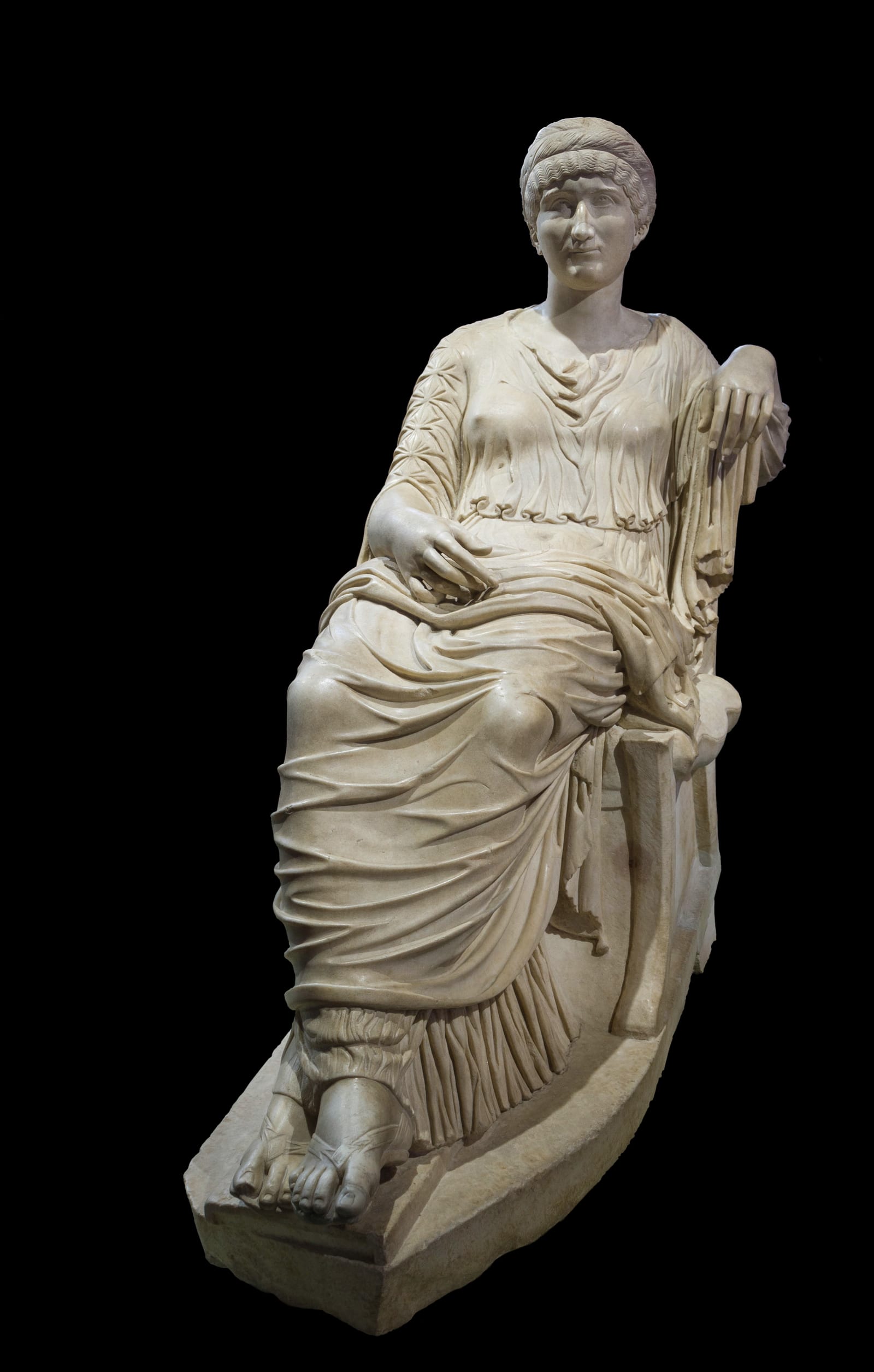
Helena was of obscure birth — by some accounts the daughter of a Bithynian innkeeper — but she became the consort of the Roman general Constantius Chlorus and the mother of Constantine the Great. Constantius set her aside when he was elevated to Caesar in 293; her son Constantine restored her to the imperial dignity when he became emperor in 306 and gave her the title 'Augusta.'
Converting to Christianity around 312, she devoted her enormous wealth and influence to the Church. She built basilicas across the empire, including the original Church of the Holy Sepulchre at Jerusalem, the Basilica of the Nativity at Bethlehem, and the Eleona on the Mount of Olives.
In 326–328, when she was nearly eighty, Helena traveled to Palestine. Tradition records that she ordered the demolition of the Temple of Venus built by Hadrian over Calvary, excavated the site, and discovered three crosses. The true Cross was identified when a sick woman touched it and was healed; the nails of the Crucifixion were also found. She left fragments at Jerusalem and brought the principal portions back to Rome, where they remain at Santa Croce in Gerusalemme — the basilica she built within her own Sessorian palace specifically to house them.