
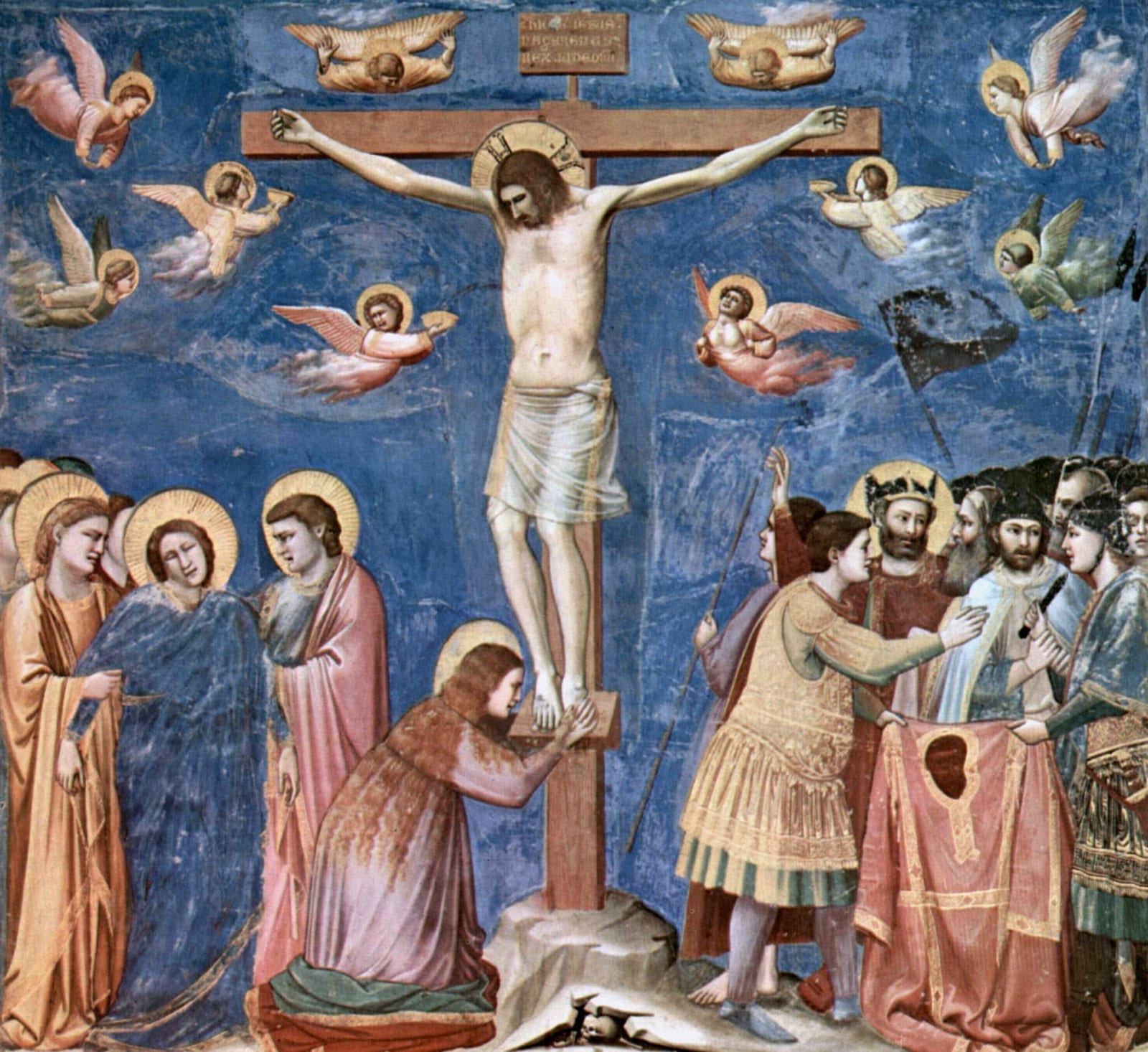
When the Empress St. Helena, mother of Constantine, made her pilgrimage to Jerusalem around 326, she directed excavations at the pagan Temple of Venus that had been built over the site of Christ's tomb. Beneath the temple — according to the testimony of St. Ambrose, St. Cyril of Jerusalem (an eyewitness as a young man), and Rufinus — were found a cave, three crosses, the title 'Iesus Nazarenus Rex Iudaeorum,' and the nails. The true cross was identified by the touch of a fragment to a dying woman, who was instantly healed.
Helena divided the cross. A great portion remained at Jerusalem; another was brought to Constantinople; a third with Helena to Rome, where it was placed in the church of Santa Croce in Gerusalemme she built within her own Sessorian Palace. Fragments were distributed across Christendom over the centuries. Today the principal substantial relics are at the Holy Sepulchre in Jerusalem; at Santa Croce in Gerusalemme in Rome; on Mt. Athos; in the Cathedral of Notre-Dame in Paris (a relic translated from Constantinople in the 13th century with the Crown of Thorns); and in dozens of other major Catholic and Orthodox cathedrals. The feast of the Exaltation of the Holy Cross (September 14) commemorates the consecration of Constantine's basilicas at Jerusalem (335).