
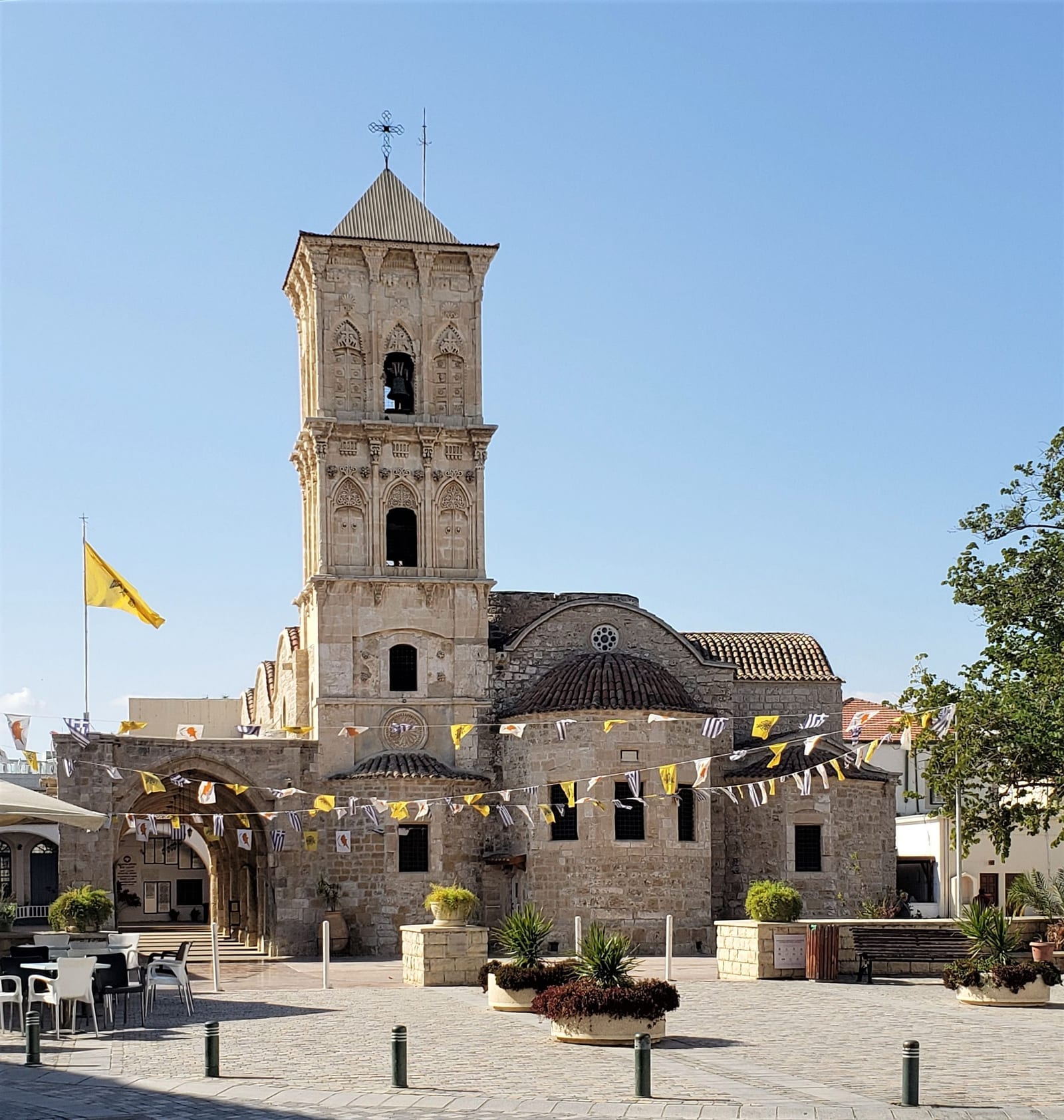
The Cypriot Catholic tradition — distinct from the better-known Provençal tradition (see Lazarus of Bethany in the existing catalogue, where the Provençal version of his post-resurrection ministry is recorded) — preserves an Eastern Mediterranean version of the post-Resurrection career of Lazarus of Bethany that locates his apostolic ministry at the great Cypriot port city of Kition (modern Larnaca) on the southern coast of Cyprus.
Per the Cypriot tradition, Lazarus — after the Resurrection of Christ and during the great Jewish persecution of the Christian community at Jerusalem after the martyrdom of Stephen (c. AD 36) — fled with his sisters Martha and Mary across the Mediterranean and ultimately settled at Kition, where he was consecrated bishop by Paul and Barnabas during their first missionary journey to Cyprus (Acts 13:4–12). He served as Bishop of Kition for thirty years until his second (and final) death around AD 63, at the age of approximately 60 (the New Testament gives no age for him at the original Bethany raising).
The tradition records that Lazarus, having once experienced clinical death and returned, never smiled during the entire thirty years of his Cypriot episcopate — except once, when he saw a thief stealing a clay pot, at which he smiled and said 'The clay steals the clay.' His tomb at Larnaca was discovered in AD 890 by the Byzantine emperor Leo VI 'the Wise,' who built the present church of Saint Lazarus over the tomb and translated some of the relics to Constantinople. The two traditions (Provençal and Cypriot) of the post-Resurrection ministry of Lazarus of Bethany are difficult to reconcile and represent the two major Mediterranean cultic traditions that developed around the figure.