
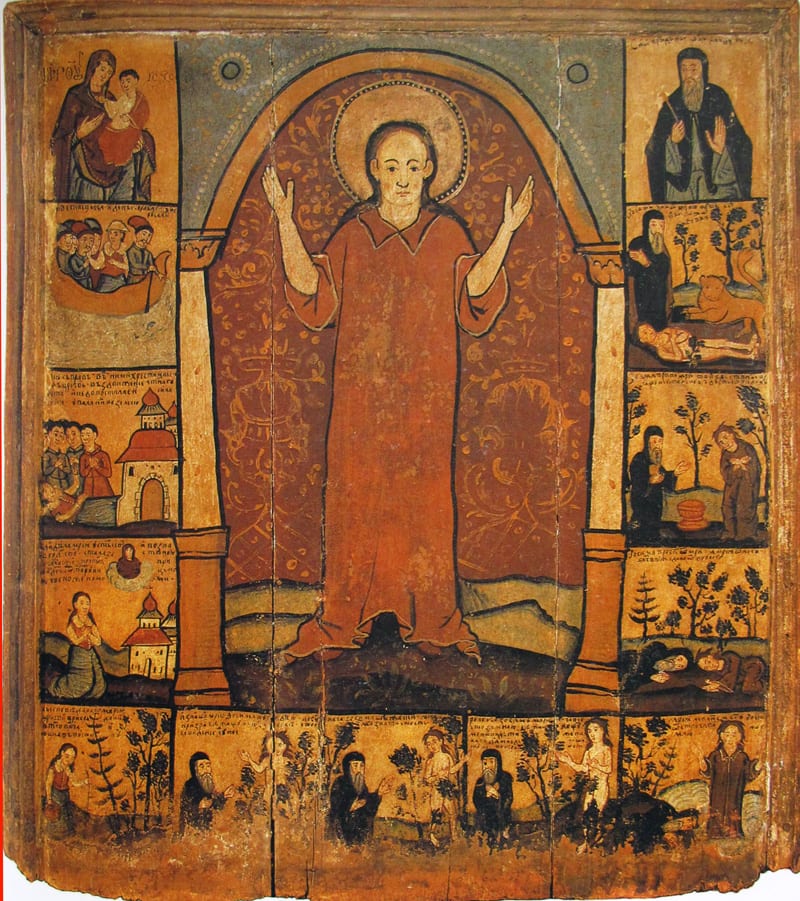
Mary was an Egyptian who lived as a prostitute in Alexandria from the age of twelve until twenty-nine — by her own later account in seventeen years of grave sin. Out of curiosity she took ship to Jerusalem with a group of pilgrims, paying her passage in flesh. On reaching Jerusalem she could not enter the Church of the Holy Sepulchre; an invisible force barred her at the door.
Recognizing this as a judgment of God, she prayed to an icon of the Theotokos in the courtyard, vowing renunciation of her life. The barrier lifted. She venerated the Cross, then crossed the Jordan and walked into the desert, where she lived as a hermit for forty-seven years.
She is known to history through the account of the monk Zosimas, who met her in the wilderness in her last year — naked, sun-blackened, levitating, capable of walking across the Jordan to receive Communion from him. He found her body a year later, buried it with the help of a lion, and returned to his monastery to tell her story.
The Life of Mary of Egypt by Sophronius of Jerusalem (7th c.) is read in part at every Byzantine Matins service on the fifth Thursday of Great Lent and in full at Matins of the following Saturday — making her the most-honored female saint of the Byzantine Lenten calendar.