
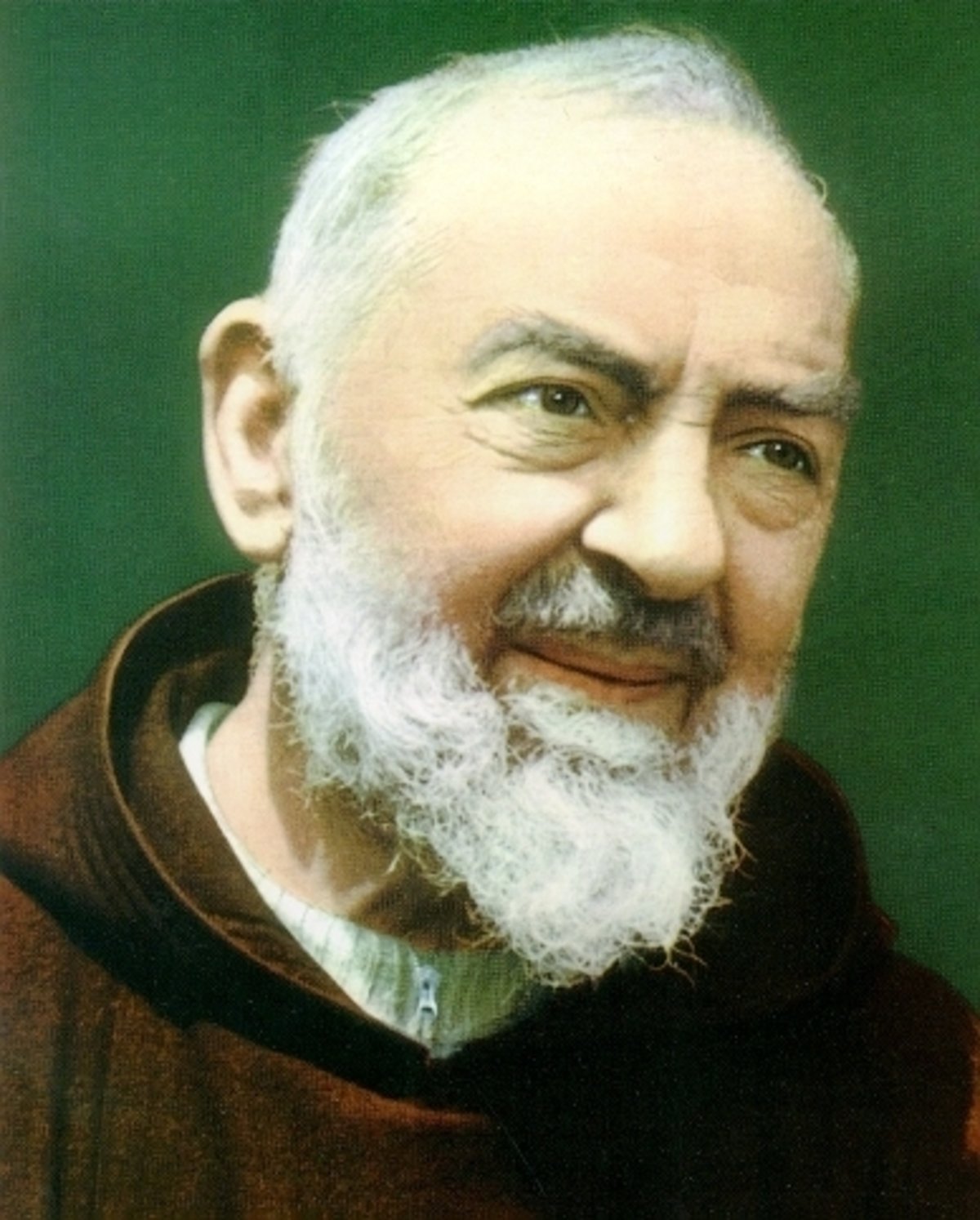
Francesco Forgione was born in the southern Italian village of Pietrelcina, the son of small farmers who emigrated periodically to America to pay for his studies. He entered the Capuchin Franciscan novitiate at fifteen, took the name Pio, and was ordained in 1910. Frail health kept him at home or in obscure friaries for years.
In 1916 he was assigned to the remote friary of San Giovanni Rotondo, on Mount Gargano in Apulia. He would remain there for fifty-two years. On September 20, 1918, praying alone in the choir loft, he received the visible stigmata — the wounds of Christ on his hands, feet, and side. He bore them for the next fifty years, the longest documented case in Church history.
Crowds came. So did the Holy Office, which placed severe restrictions on him from 1922 to 1933 — denying him public Mass, public confession, contact with most visitors — and later revisited the restrictions in the 1950s. He bore it all in silence. When permission was finally restored, the pilgrims returned in still greater numbers.
He founded the Casa Sollievo della Sofferenza ('Home for the Relief of Suffering') in 1956 — a major modern hospital that still operates today. He died on September 23, 1968. Beatified by John Paul II in 1999 and canonised in 2002. His body was exhumed in 2008 and is displayed for veneration in the sanctuary church. San Giovanni Rotondo receives some seven million pilgrims a year, more than Lourdes.