
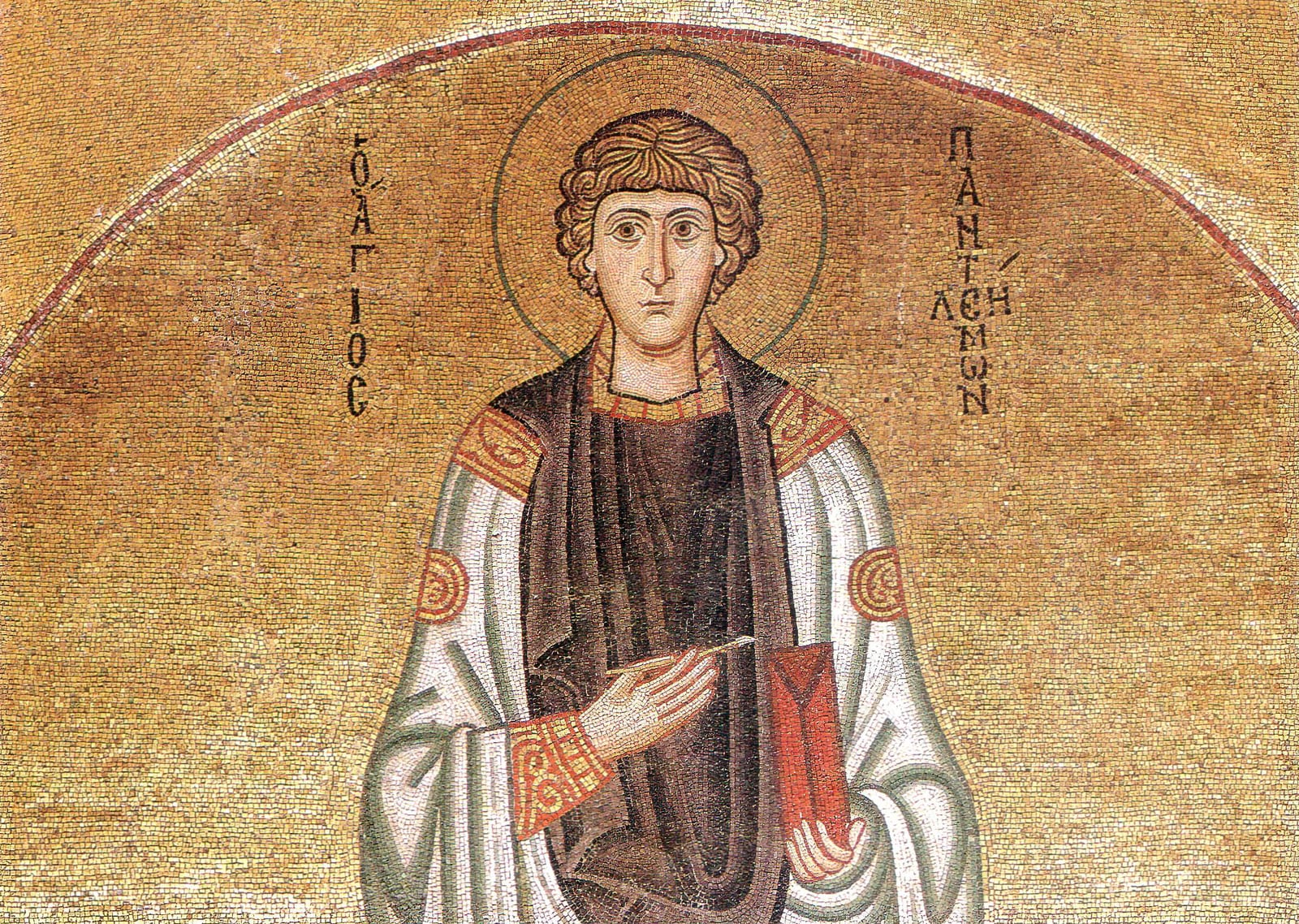
Pantaleon was a physician of Nicomedia, the eastern capital, and was put to death there in the great persecution, about 305. The East holds him in higher honour than the West does: he is <em>Panteleimon</em>, 'all-compassionate', and is numbered among the <em>anargyroi</em>, the holy unmercenaries who treated the sick and refused the fee. His name is in the ancient martyrologies and his cult is attested from the fifth century.
His legend says that he was raised a Christian by his mother, lapsed while apprenticed to the emperor's own physician, and was won back by the priest Hermolaus, after which he treated the poor for nothing and was denounced by rival doctors for it. The extravagances of the passion — the fire that would not burn, the molten lead that went cold, the olive tree that flowered when his blood struck it — are the common furniture of late Greek martyr-acts and should be read as such.
A phial of his blood is kept at Ravello on the Amalfi coast, and is reported to liquefy on his feast each 27 July and at other times, as the more famous blood of Januarius does at Naples. The Church has never pronounced on either; both are kept as devotions, not as proofs.