
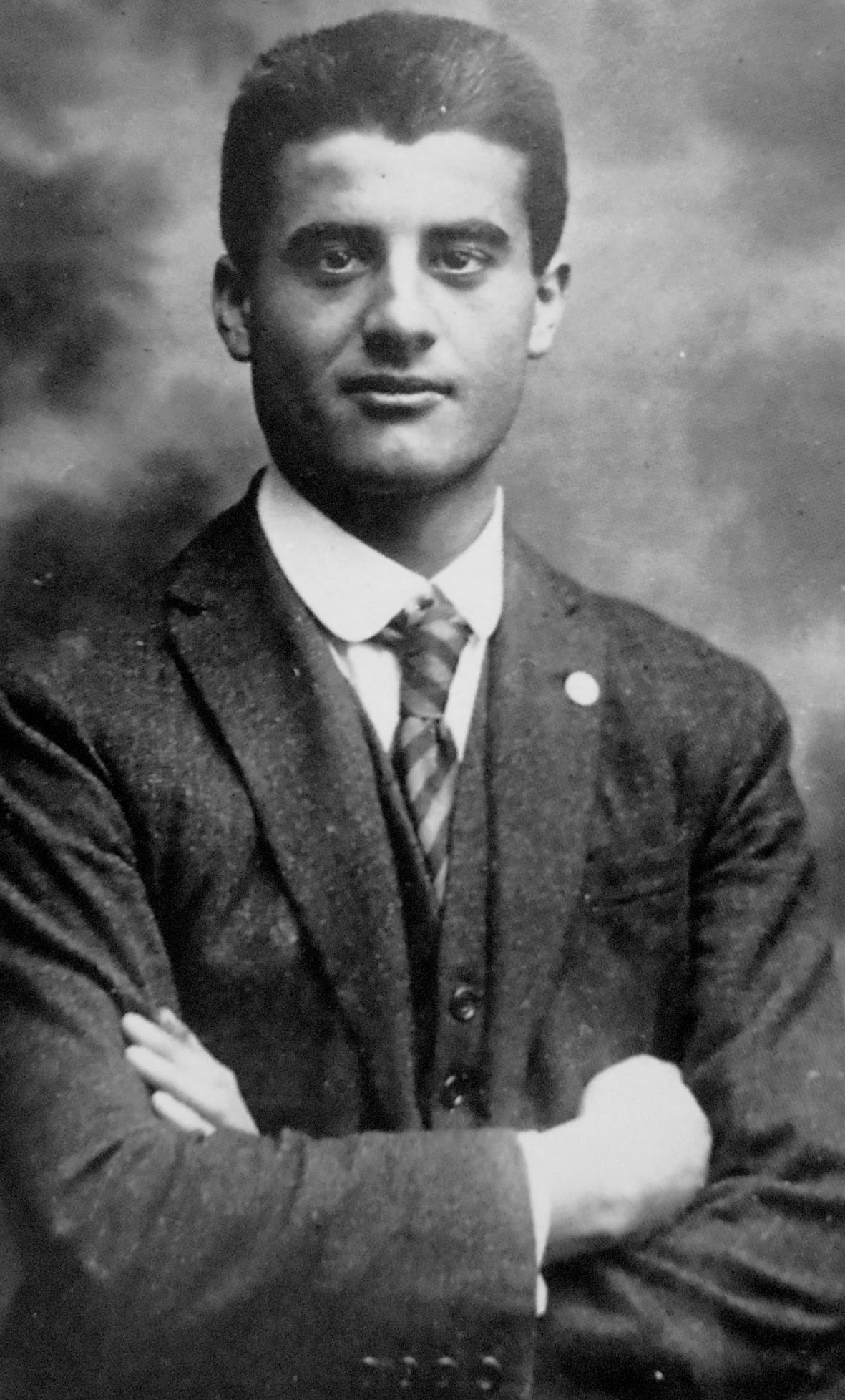
Pier Giorgio Frassati was born in Turin to a prominent Italian family: his father Alfredo Frassati was founder and editor-in-chief of La Stampa (one of Italy's principal newspapers) and later Italian ambassador to Germany; his mother Adelaide Ametis was a celebrated painter. He grew up in a household more cultural and political than religious — his Catholic faith was almost entirely his own choice.
From his teenage years he combined three lives that often surprised those who saw any one of them in isolation. He was the prankish, popular friend at the centre of a circle of young Catholic intellectuals at Turin University. He was a serious mountaineer, climbing all the great peaks of the Italian Alps, and an early member of Catholic Action and the Dominican Third Order. And he was — silently, almost secretly — a constant friend of the destitute of Turin, going daily into the worst slums of the city to bring food, clothing, medical attention, and the sacraments to families no one else visited.
He died at twenty-four on July 4, 1925, of fulminating poliomyelitis contracted (his family later realised) from one of the families he had been visiting in the slum. His funeral was the largest Turin had seen in years: the great and the poor of the city came together in unprecedented numbers. Beatified by John Paul II in 1990; canonised by Pope Leo XIV on September 7, 2025 — co-canonised with St. Carlo Acutis, two young Italian laymen of the modern era together raised to the altars.
His most famous phrase — verso l'alto, 'to the heights' — written on the back of a photograph of him on a Dolomite climb, has become the motto of Catholic youth movements worldwide. John Paul II called him 'the Man of the Beatitudes.'