
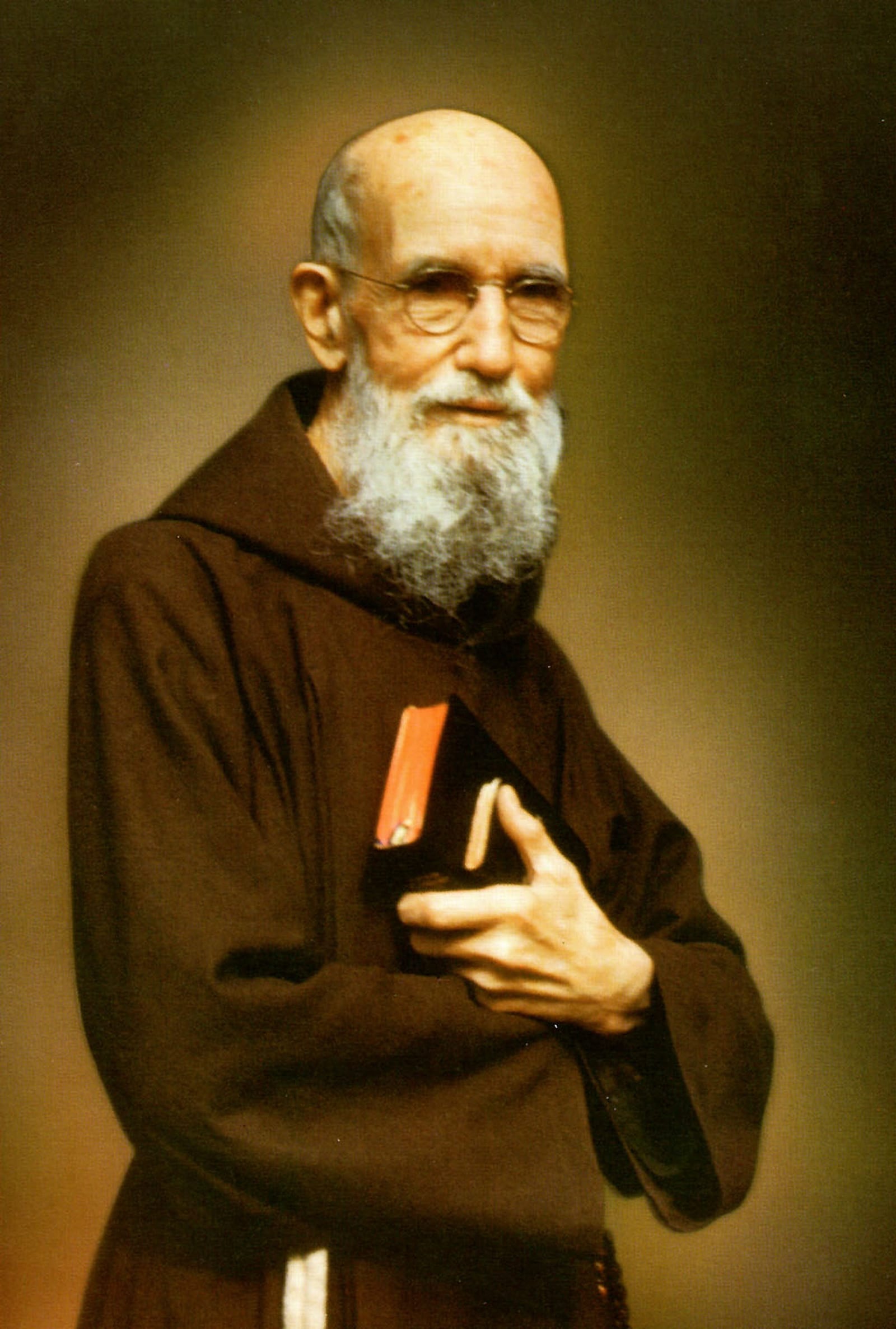
Bernard Casey was the sixth of sixteen children of Irish immigrant parents in rural Wisconsin. After working as a lumberjack, prison guard, motorman, and hospital orderly, at twenty-one he was accepted into the Capuchin Franciscan novitiate at Detroit, taking the name Solanus. His academic difficulties were severe — he could not master the formal theology required for full sacred orders — and he was ordained in 1904 as a 'sacerdos simplex': a priest authorised to celebrate Mass and to administer simpler sacraments, but not to hear confessions or to preach formal homilies. The Order treated this almost as a humiliation.
Solanus accepted it without complaint and was sent as porter — answering the door — to the Capuchin friary on East 156th Street in New York, then to Yonkers and Brooklyn, then in 1924 (at age 53) to the new St. Bonaventure Monastery in Detroit, where he would spend the next 21 years.
From the doorkeeper's chair at St. Bonaventure he became — quietly, with no announcement or fanfare — one of the great American Catholic mystics of the 20th century. Lines of people seeking his counsel and his prayers grew through the 1920s and 30s; he kept a notebook in which he recorded petitions and (when he heard back from petitioners) the answers received. The notebooks survive, listing thousands of attested healings and conversions through Casey's intercession.
He died at Detroit's St. John Hospital in 1957, his last words: 'I give my soul to Jesus Christ.' Some 20,000 attended his wake. Declared Venerable by John Paul II in 1995; declared Blessed by Pope Francis at a Mass in Detroit on November 18, 2017 — only the second American-born person ever to be beatified (after Stanley Rother of Oklahoma, beatified earlier the same year).