
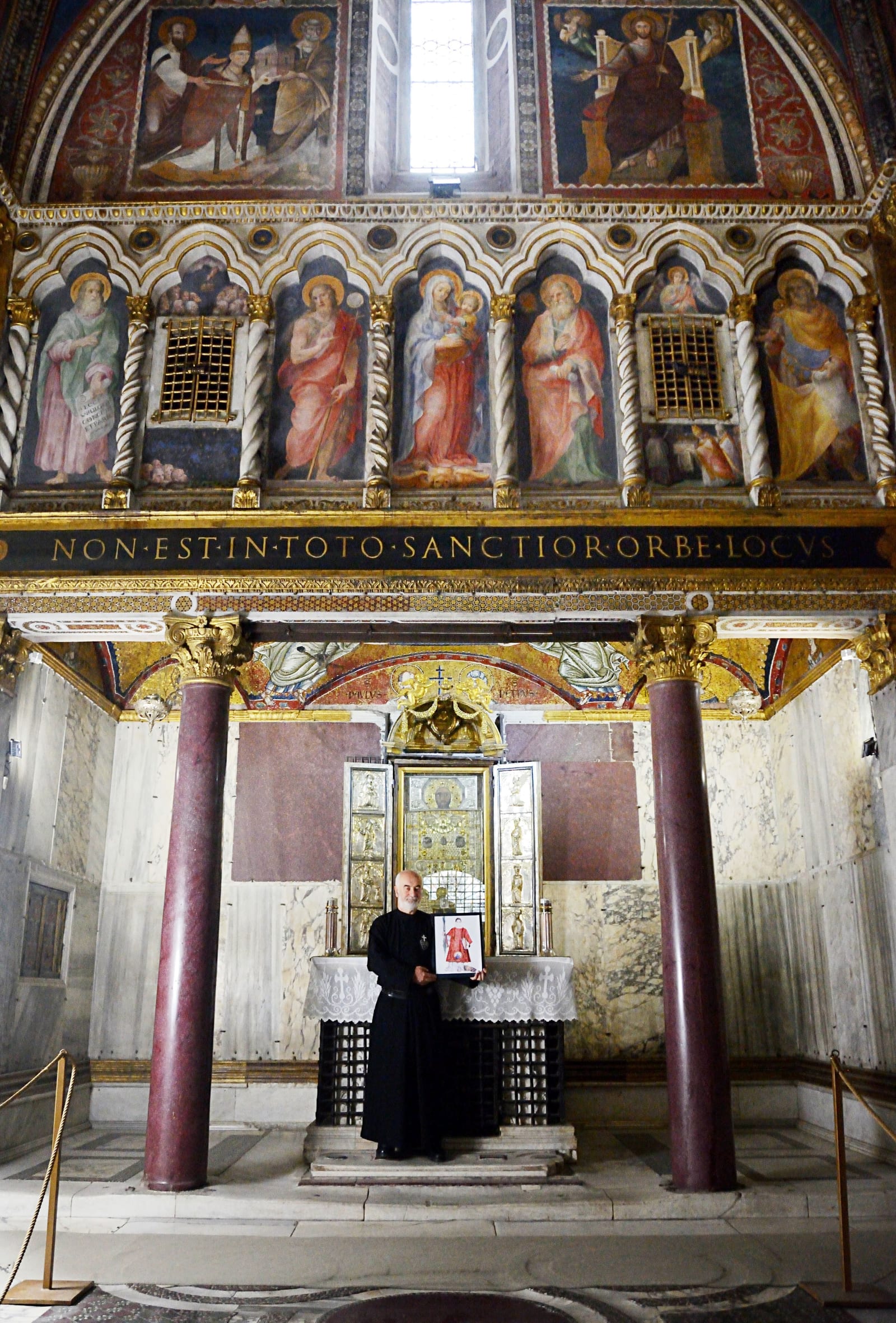
The Acheropita ('not made by hands') is a 5th- or 6th-century Byzantine encaustic panel icon of Christ enthroned, approximately 142 × 58 cm, preserved in the Sancta Sanctorum — the private chapel of the popes at the Lateran, at the head of the Holy Stairs (Scala Santa). By tradition, the icon was begun by St. Luke the Evangelist and finished by an angel, and was brought to Rome around AD 590 by St. Gregory the Great (or earlier).
Every medieval pope from Gregory the Great onward venerated the icon as the principal sacred image of the Roman papacy. It was processed through Rome each year on the eve of the feast of the Assumption (August 14) in the Procession of the Acheropita, from the Sancta Sanctorum down through the Forum to Santa Maria Maggiore — one of the great Roman religious processions of the Middle Ages, suppressed only in the 16th century. The icon was the principal model for subsequent Western Christ-enthroned iconography and is preserved in its original silver and gold revetment in the Sancta Sanctorum, which the present pope alone is permitted to celebrate Mass within.