
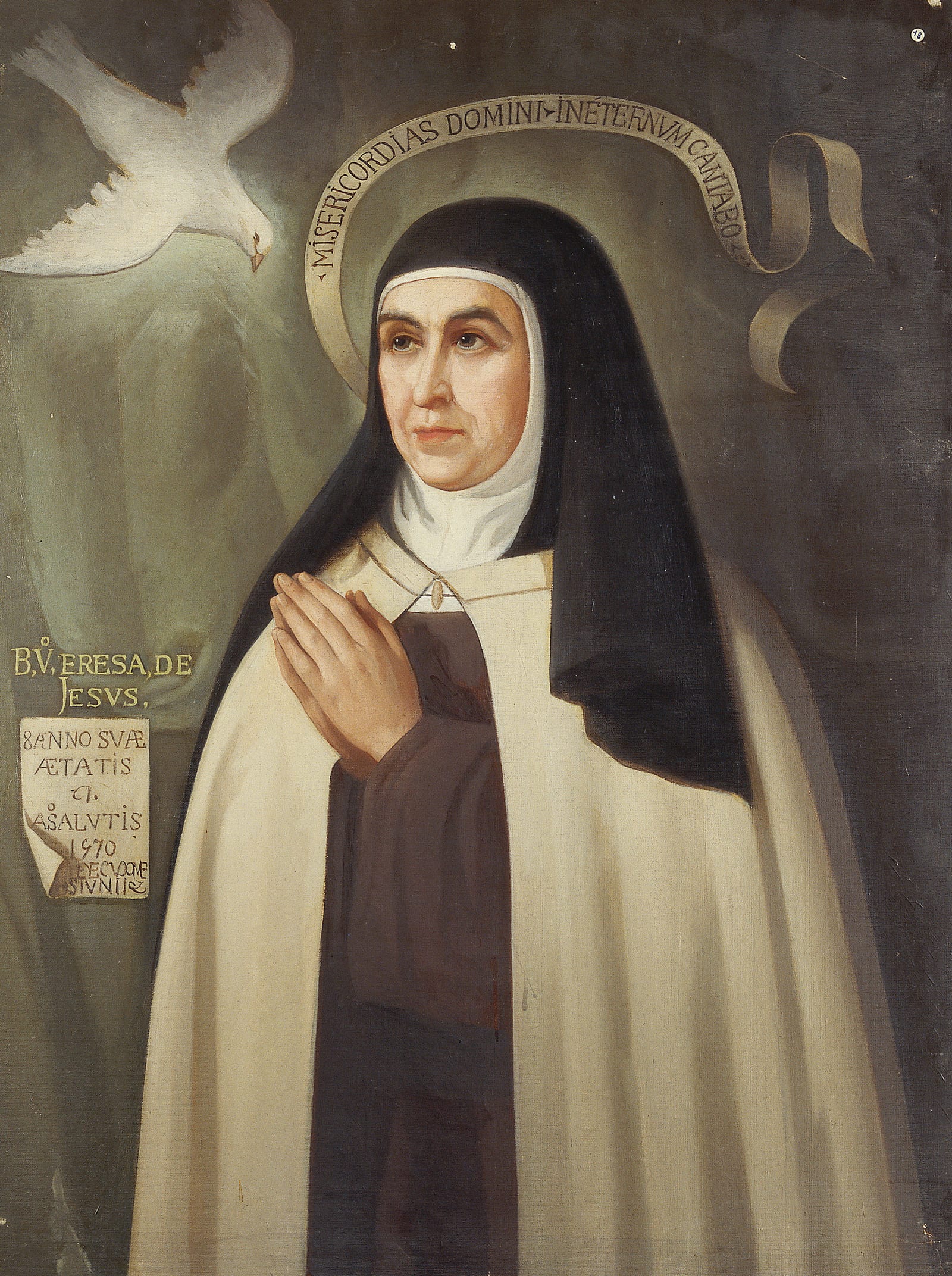
Beginning in 1559 — at the same general period as the transverberation of her heart — St. Teresa of Ávila (1515–1582) began receiving direct visions of Christ. She records the first one with characteristic specificity in chapter 27 of her Autobiography: a vision not of His full body but of His hands alone, of such beauty that 'no words could describe them.' Then, after some time, of His face; then, after still longer, of His full bodily form — first as the risen Christ, then as the suffering Christ, then as the Christ of the Eucharistic celebration.
These visions were not, in Teresa's careful theological language, imaginative (formed in the imagination) but intellectual (received directly in the spirit, without intervention of sense or imagination). She distinguishes them carefully in chapter 28: the intellectual vision is more enduring, less dangerous to spiritual pride, and more transforming than the imaginative. Her testimony is among the most psychologically precise records of mystical experience in any literature. Her spiritual directors — the future St. John of the Cross, the future St. Francis Borgia, and others — confirmed them as authentic. The visions continued in various forms for the remaining 23 years of her life.