
By the ancient Spanish tradition, the Apostle St. James the Greater (who, after Pentecost, evangelised Spain before returning to Jerusalem to be martyred under Herod Agrippa in AD 44) was praying despondently on the banks of the Ebro at Caesaraugusta (Zaragoza) at midnight on January 2, AD 40. The Blessed Virgin Mary — then still living, in Jerusalem — appeared to him in bilocation, standing upon a column of jasper, accompanied by angels. She comforted him and asked that a church be built on the spot.
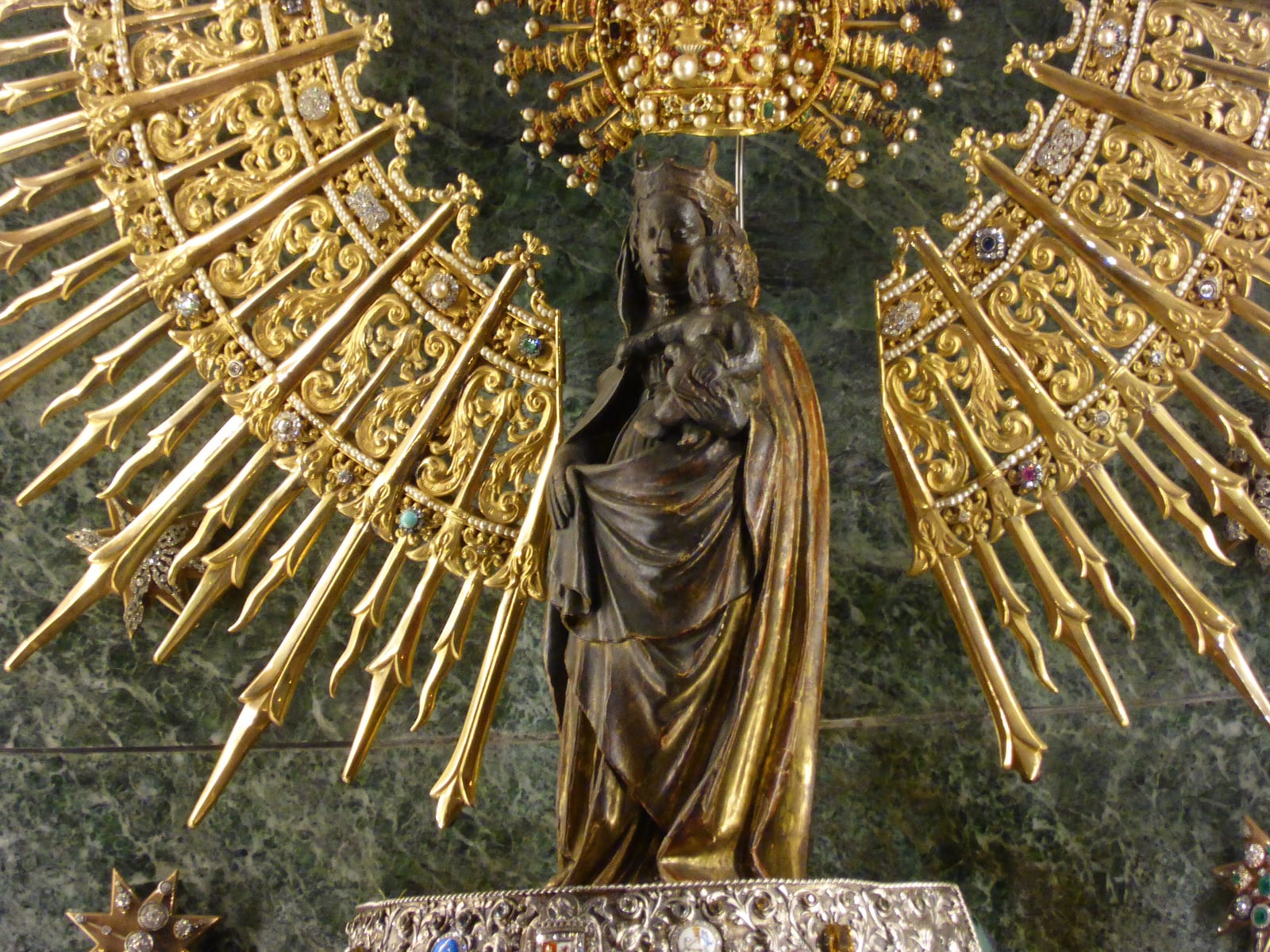
The pillar (pilar) of jasper — about 5 feet tall — remains in place to this day, encased in silver and bronze and preserved within the heart of the great Baroque Basílica de Nuestra Señora del Pilar in Zaragoza. A small 14th-century wooden image of the Virgin and Child sits upon the column, vested in elaborate manteo robes that are changed daily. Although the tradition of the apparition cannot be historically documented before the 13th century, the cult of Pilar is the principal Marian devotion of Spain — the basilica is the largest Baroque church in Spain — and the feast (October 12) is the National Day of Spain. The apparition is considered by the Church as the earliest in Marian history (Mary's only apparition during her earthly life) and is the only one approved without further investigation, on the strength of immemorial Spanish tradition.