
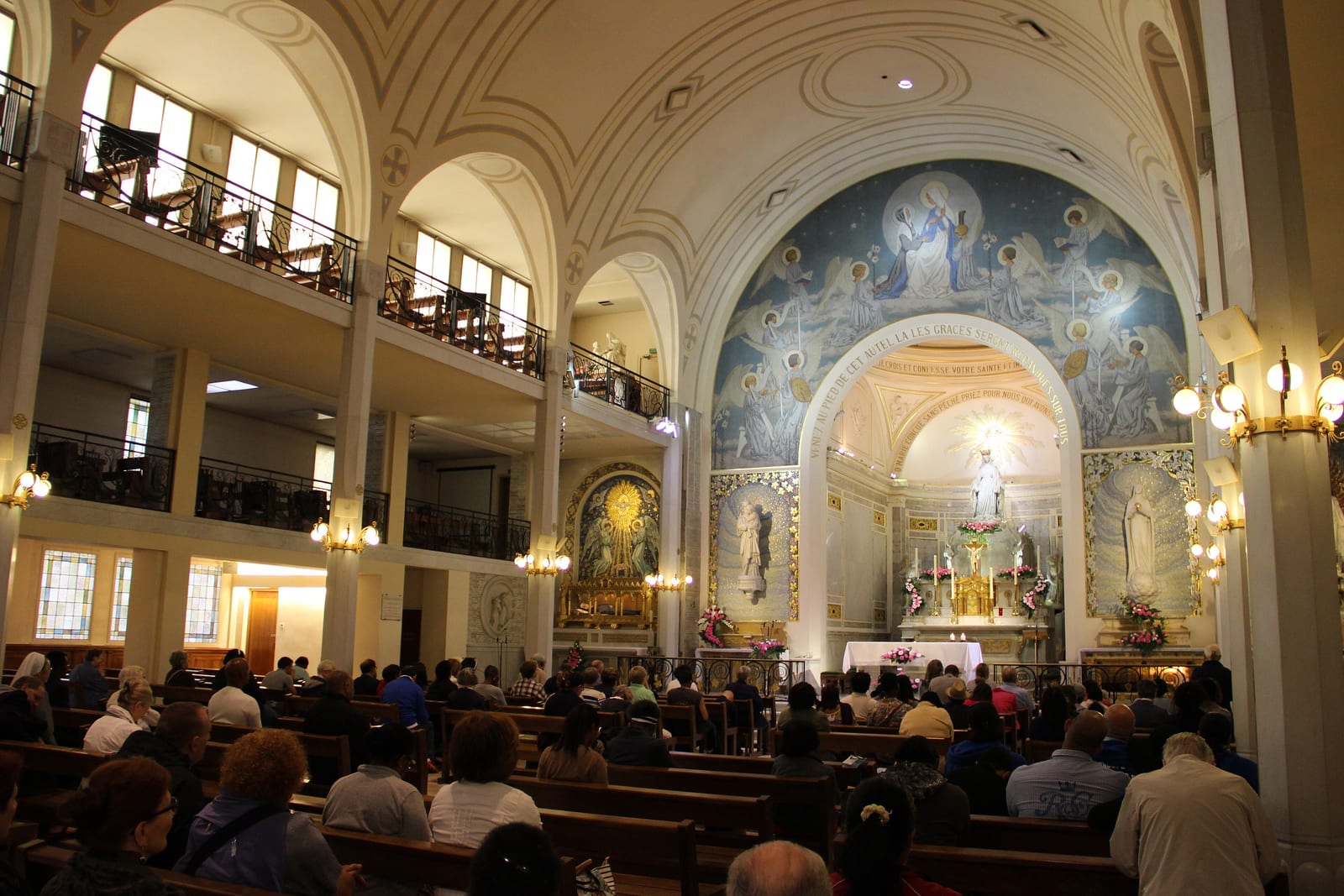
On the night of July 18–19, 1830, the young Sister of Charity novice Catherine Labouré was awakened by a child and led to the convent chapel of the Daughters of Charity at 140 Rue du Bac in Paris. There she was visited by the Blessed Virgin Mary, who sat in the director's chair and spoke with her at length about coming trials for France (the July Revolution would erupt eight days later) and about Mary's continuing protection of her religious family.
On November 27, 1830, in a second great apparition, Mary appeared standing on a globe, with rays of light streaming from her hands. Around her was an oval frame inscribed with the words: 'O Mary, conceived without sin, pray for us who have recourse to thee.' The image then turned — revealing on its reverse a large M surmounted by a cross, with the Sacred and Immaculate Hearts of Jesus and Mary below, surrounded by twelve stars. Mary directed Catherine: 'Have a medal struck after this model. Those who wear it will receive great graces.'
The medal was struck in 1832 with the approval of Archbishop de Quélen of Paris. By 1835 over a million had been distributed; by Catherine's death in 1876, several hundred million. The Marian phrase from the medal — 'O Mary, conceived without sin' — anticipated by 24 years Pope Pius IX's solemn definition of the Immaculate Conception (1854). Catherine kept her identity as the visionary secret for forty-six years; she was identified only on her deathbed. Canonised 1947. The chapel of the Rue du Bac receives over 2 million pilgrims a year — among the most visited Marian sites in Paris.