
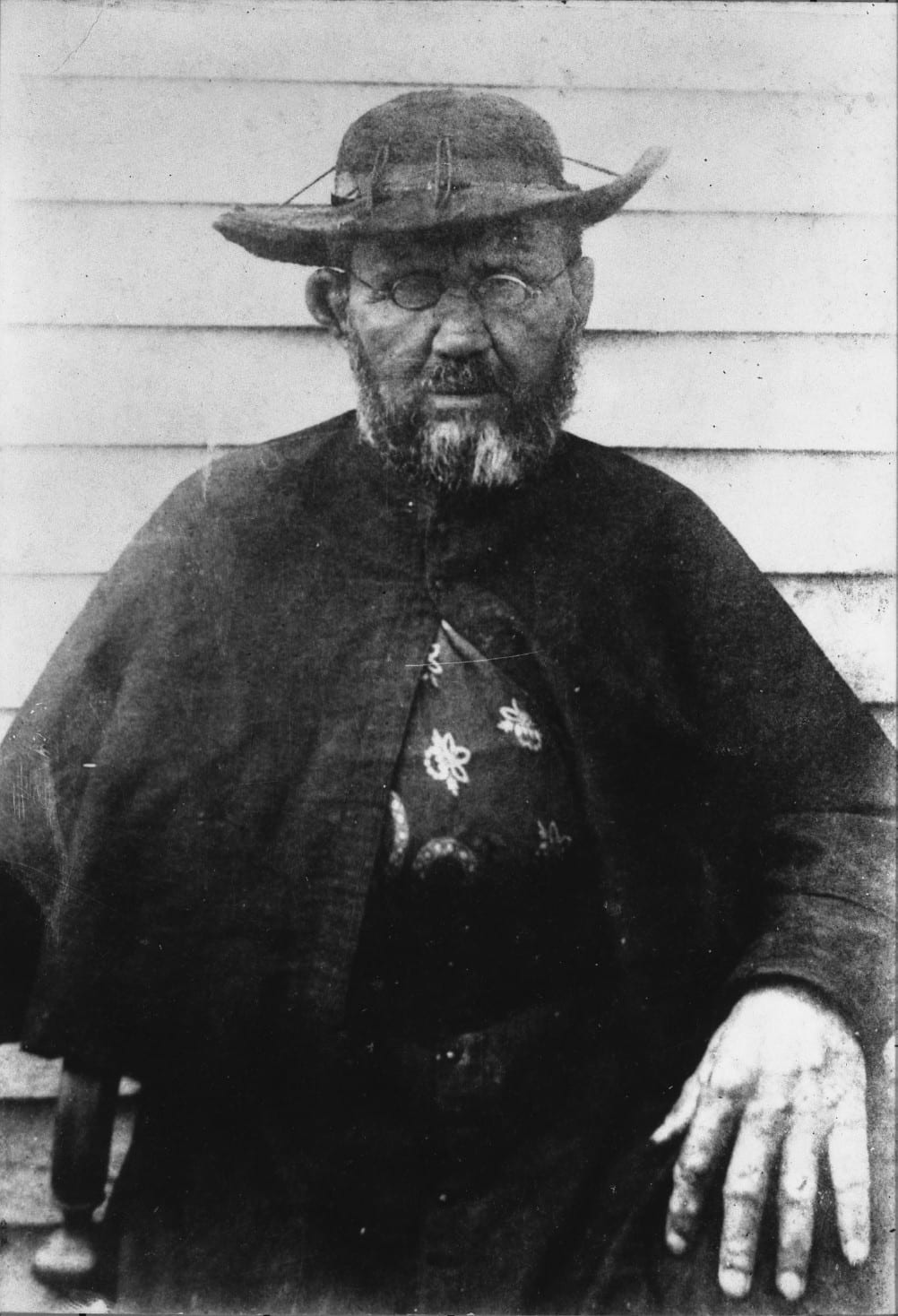
Joseph De Veuster grew up on a Flemish farm and took the religious name Damien when he entered the Congregation of the Sacred Hearts of Jesus and Mary in 1858. In 1864, he sailed to Honolulu in place of his sick brother and was ordained there in the cathedral on the day he arrived. For nine years he served scattered missions on the Big Island.
In 1865 the Hawaiian government, terrified of the leprosy (Hansen's disease) epidemic introduced by foreign workers, established a quarantine colony at Kalawao on the Kalaupapa peninsula of Molokai — a strip of land separated from the rest of the island by a two-thousand-foot sea cliff. By 1873 some eight hundred patients had been dumped there with no medical care, no priest, and almost no food. The Bishop asked for volunteers. Damien stepped forward.
He arrived on May 10, 1873, intending to stay a few months until another priest could replace him. He stayed sixteen years. He built churches, dug graves, splintered limbs, dressed sores, baptized the dying, fought the Honolulu government for food and medicine, and lived among the lepers as one of them — eating with them out of the common bowl, smoking from the same pipes. In 1885, addressing his congregation, he began for the first time: 'We lepers...'
He died at Kalawao on Tuesday in Easter week 1889 at forty-nine, in a small wooden house beside St. Philomena Church. He was buried under the same pandanus tree where he had slept his first nights on Molokai. In 1936 his body was returned to Louvain; in 1995 his right hand was returned to Kalaupapa. Hawaii sent his statue to the United States Capitol in 1969; it stands in the Hall of Columns.