
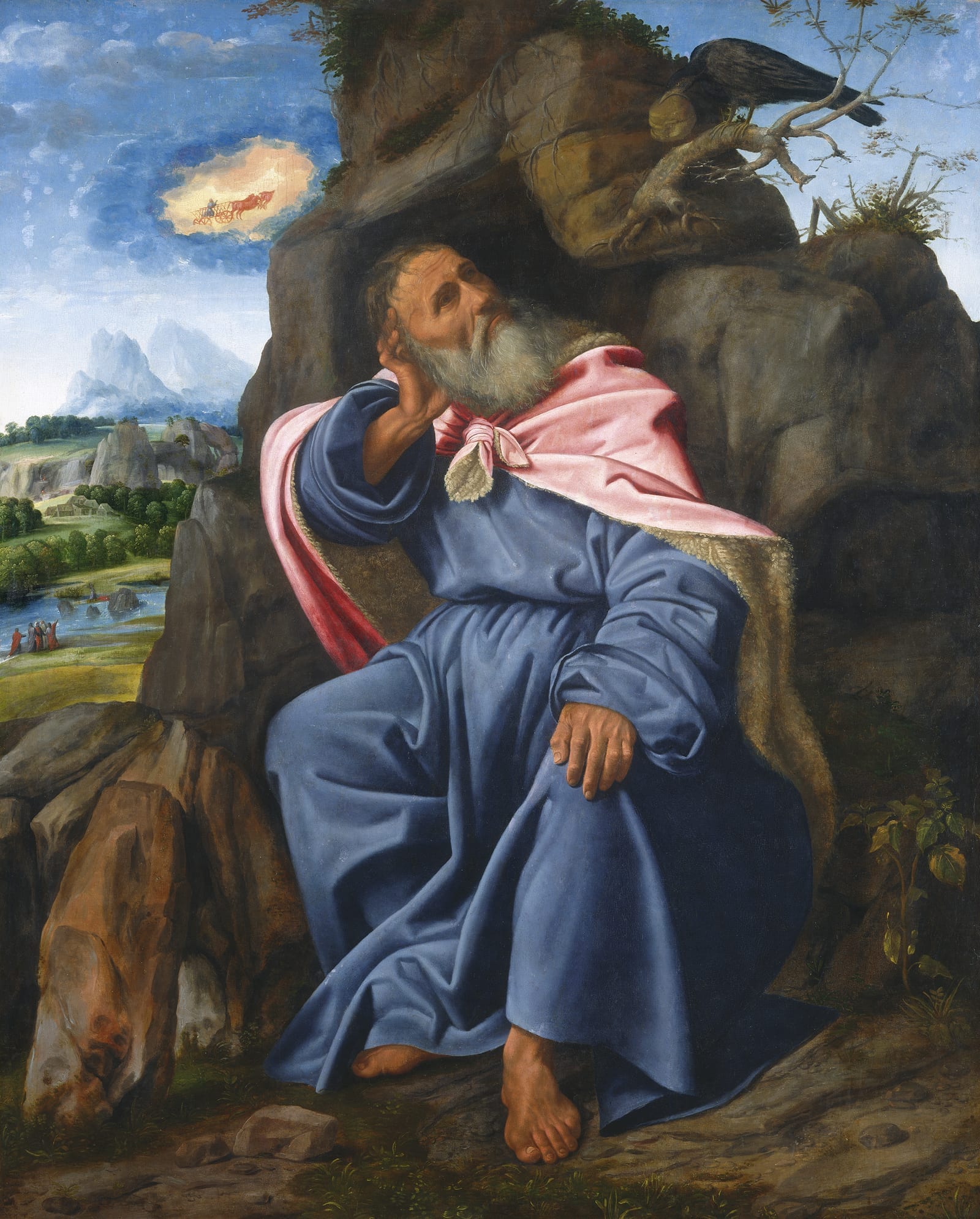
Elijah the Tishbite appeared suddenly in the reign of King Ahab and Queen Jezebel, who had set up the altars of Baal. He pronounced a three-year drought; was fed at the brook Cherith by ravens; raised the widow's son at Zarephath; and at the great contest on Mount Carmel called down fire from heaven that consumed the soaked altar and sacrifice, vindicating the Lord against four hundred and fifty prophets of Baal.
Fleeing the threat of Jezebel he traveled forty days to Mount Horeb. There the Lord passed by — not in the wind, not in the earthquake, not in the fire, but in a still small voice (1 Kings 19:11–12). He was sent back to anoint Hazael king of Syria, Jehu king of Israel, and Elisha as his successor.
Elijah did not die. He was taken up to heaven in a fiery chariot, his mantle falling on Elisha (2 Kings 2:11). Tradition holds he will return at the end of the age (Mal 4:5; Mt 17:11) — and he appeared with Moses to the Lord at the Transfiguration on Mount Tabor.
The Carmelite Order takes him as their spiritual father, tracing their origin to hermits on Mount Carmel in imitation of Elijah's prayer at the cave there.