
MIRACULOUS MIRACLES™

Saint — Goar of Aquitaine

St. Goar of Aquitaine
c. 495 AD, Aquitaine — July 6, 575 AD, Sankt Goar, on the Middle Rhine
Hermit-Priest of the Middle Rhine — Pastoral Apostle of the Frankish Rhine Crossing
Stiftskirche Sankt Goar, Sankt Goar, Rhine-Hunsrück district, Rhineland-Palatinate, Germany, Germany
Feast
July 6
Canonized
Cult of ancient antiquity
Life

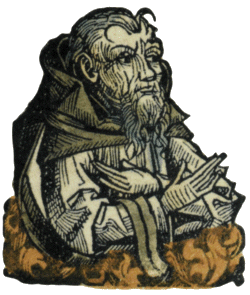
Goar (Latin Goarius, Frankish Goharius — the etymology preserves an Old Frankish 'good-warrior' meaning) was — per the foundational Vita Sancti Goaris composed in the 9th century by Wandalbert of Prüm — born around 495 AD in Aquitaine to a Gallo-Roman Christian family. He was ordained priest in his Aquitanian native diocese and at about 50 years of age (around 545 AD) withdrew from his Aquitanian parish to become a hermit-priest on the Middle Rhine, at the dangerous narrow stretch of river immediately upstream of the famous Lorelei rock (where the Middle Rhine cuts through the Hunsrück mountains and produces one of the most treacherous river-navigation stretches in pre-modern Western Europe).

Goar established his hermit-cell on the eastern bank of the Rhine at the small location that has been called Sankt Goar ever since. The dangerous Rhine-navigation stretch immediately downstream meant that substantial numbers of Frankish-Rhenish river travellers were forced to pause at his hermit-cell location before attempting the Lorelei crossing. Goar — combining his eremitic prayer-life with substantial pastoral hospitality to the river travellers — established the foundational pattern of the Catholic Rhineland Christian hospitality-monastery that would become characteristic of the medieval Rhine-Mosel monastic system.

He died at his hermit-cell on July 6, 575. The small church and pilgrim-hospice he had established was substantially expanded across the medieval period into the Stiftskirche Sankt Goar (the small medieval collegiate church of Sankt Goar on the Middle Rhine), which became a foundational Rhineland-Catholic pilgrimage site. The town of Sankt Goar (named for him) is one of the foundational continuous Rhineland-Catholic civic identities.

Miracles & Phenomena
  • The Royal Investigation of Bishop Rusticus

    The medieval German hagiographic tradition holds that Goar — repeatedly accused by the local Bishop Rusticus of Trier of various ecclesiastical irregularities — was summoned by King Sigibert I of the Franks for a formal royal investigation around 565. Goar appeared at the royal court with a cloak still soaking-wet from his recent crossing of the Rhine; he hung the cloak on a passing sunbeam (which held it suspended in mid-air through the duration of the trial) — the foundational medieval Rhineland-German miracle preserved on every painted altarpiece of Sankt Goar and the iconographic emblem of his cult.

Relics
  • Body
    Tomb of St. Goar of Aquitaine
    Stiftskirche Sankt Goar, on the Middle Rhine (the original 6th-century cell-site, expanded into the medieval collegiate church)

    His tomb at the small Stiftskirche Sankt Goar on the eastern bank of the Middle Rhine, immediately upstream of the Lorelei rock, is the foundational continuous Rhineland-Catholic pilgrim-site of the Middle Rhine region.

Iconography
  • Goar hanging his cloak on the sunbeam

    The aged Aquitanian-Rhineland hermit-priest at the Frankish royal court hanging his still-wet cloak on a sunbeam passing through the throne-room window, the cloak held suspended in mid-air, the assembled Frankish royal court astonished — the iconography of foundational Rhineland-Catholic vindication-by-miracle.

Patronages
Rhine-Mosel boatmen and river-travellersCatholic German Rhine-Catholic identityHospitable inn-keepers (a popular medieval German tradition derived from his foundational pastoral hospitality)Sankt GoarTravellers crossing the dangerous Lorelei stretch of the Middle RhineDiocese of Trier