
MIRACULOUS MIRACLES™

Saint — Lidwina of Schiedam

St. Lidwina of Schiedam
March 18, 1380 AD, Schiedam, County of Holland (Dutch peasant family) — April 14, 1433 AD, Schiedam, County of Holland
Dutch mystic; patron of ice skaters; Catholic model of 'redemptive suffering'
Basilica of Sts. Liduina and Our Lady of the Rosary (Basiliek van de H. Liduina en OLV Rozenkrans), Schiedam, Netherlands — her shrine; Dutch Catholic pilgrim destination, Netherlands
Feast
April 14
Canonized
Canonized March 14, 1890 by Pope Leo XIII
Life

Lidwina (Dutch Liduina) was born on March 18, 1380 at Schiedam in the County of Holland (modern Netherlands) to a Dutch peasant family. Her father was a nightwatchman at Schiedam.

On February 2, 1396, at the age of 15, Lidwina suffered a famous ice-skating accident on the frozen canal at Schiedam — falling and breaking a rib. The broken rib became infected, producing the 37 years (1396–1433) of continuous chronic illness and progressive physical disability.

Lidwina's chronic illness — diagnosed by modern medical historians as probably multiple sclerosis or a related progressive neurological disease — progressively destroyed her physical health: headaches, vomiting, fever, the eventual paralysis of her entire body, the loss of sight in one eye, the chronic wounds producing continuous suppuration.

During her 37-year chronic illness, Lidwina undertook the vocation of 'redemptive suffering' — offering her continuous physical pain in union with the Passion of Christ for the salvation of souls. She reported the mystical-ecstatic experiences (visions of Christ, of the Blessed Virgin, of the saints, and ecstatic-mystical unions with the divine Passion), and the documented Eucharistic-inedia (reporting to live exclusively on the reception of the sacred host for long periods of her illness).

In 1421 during the famous St. Elizabeth's Flood (catastrophic North Sea storm-flood that destroyed vast portions of the Zuid-Holland coastal area, one of the principal natural disasters of medieval European history), Lidwina survived — her Schiedam house miraculously spared from the flooding.

Lidwina died at Schiedam on April 14, 1433 at the age of 53. Her 'redemptive suffering' vocation established her patronage of the chronically ill and of those who have lost patience.

Miracles & Phenomena
  • The patron of ice skaters

    St. Lidwina of Schiedam's famous February 2, 1396 ice-skating accident at Schiedam — producing the 37 years of chronic illness that established her sanctity — established her patronage of ice skaters and of the ice-skating sport. Lidwina is the only Catholic saint with the patronage of the ice-skating sport, in institutional distinction from the general patronages of winter sports and Alpine sports (St. Bernard of Menthon).

  • The Eucharistic-inedia and 37-year illness

    Lidwina's 37-year chronic illness (1396–1433) — documented by contemporary witnesses including the famous Dutch chronicler John Brugman (1400–1473), who composed the Vita of Lidwina — established her vocation of 'redemptive suffering'. The documented Eucharistic-inedia (reporting to live exclusively on the reception of the sacred host for long periods) became one of the principal medieval Catholic mystical-corporeal narratives.

Relics
  • Body
    Relics of St. Lidwina of Schiedam
    Basilica of Sts. Liduina and Our Lady of the Rosary (Basiliek van de H. Liduina en OLV Rozenkrans), Schiedam, Netherlands — shrine

    Her relics rest at the Basilica of Sts. Liduina and Our Lady of the Rosary at Schiedam — the principal Dutch Catholic pilgrim destination associated with St. Lidwina.

Iconography
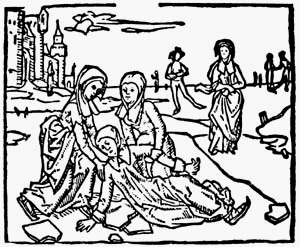
  • Lidwina on the ice at Schiedam (February 2, 1396)

    The 15-year-old Dutch peasant-girl in late-14th-century Dutch peasant dress on the frozen canal at Schiedam on February 2, 1396, falling on the ice — the classic Dutch Catholic iconography of the Lidwina-of-Schiedam ice-skating accident.

Patronages
Ice skaters (patronage: her famous 1396 ice-skating accident instituted her patronage of ice skaters and of the ice-skating sport)Catholic suffering the chronically ill; those who have lost patience; those with pain that cannot be relievedSchiedam and the Dutch-Zuid-Holland Catholic tradition