
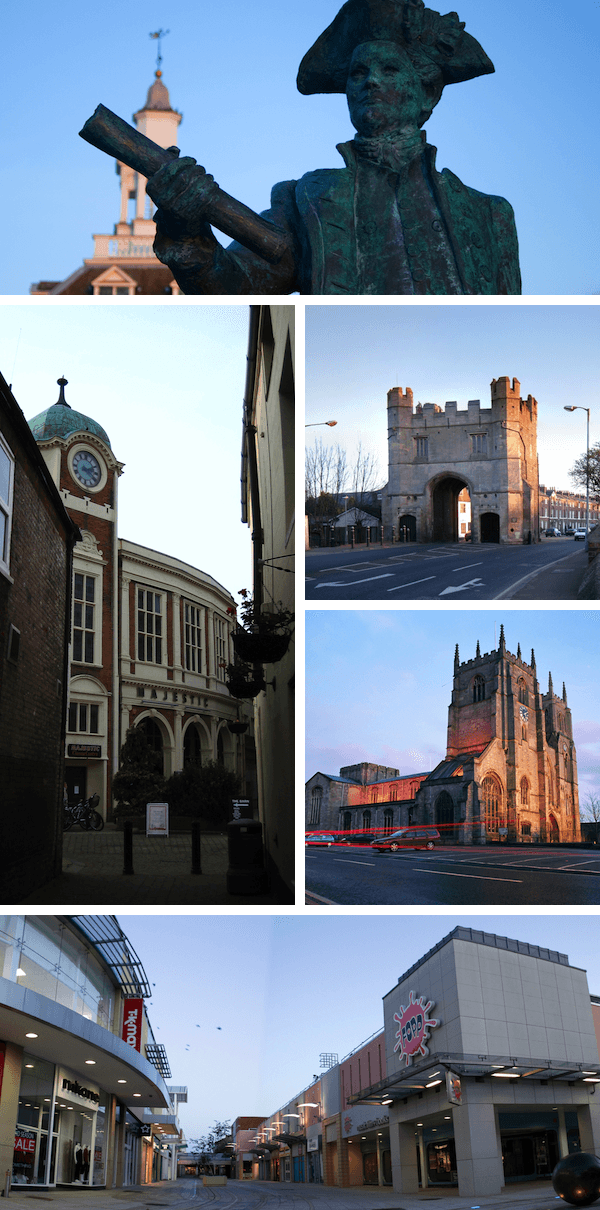
Margery was born around 1373 at King's Lynn (then Bishop's Lynn) in Norfolk to the Burnham family — her father John Burnham was mayor of Lynn and Member of Parliament.
At the age of 20 (1393), Margery was married to John Kempe, a Lynn burgess. The marriage produced 14 children.
After a psychiatric-mystical episode following the birth of her first child (documented in the Book of Margery Kempe), Margery received a vision of Christ that initiated her lifelong mystical-devotional experiences.
Around 1413, at the age of 40, Margery negotiated the virginity-in-marriage arrangement with her husband John — undertaking the virginal-marital life (in institutional continuity with the earlier medieval Catholic virgin-marriage tradition of Sts. Henry and Cunigunde, Edward the Confessor and Edith, Salomea of Poland, Elzear and Delphine).
Margery undertook the famous series of pilgrimages: to Jerusalem (1413–1414), to Rome (1414–1415), to Santiago de Compostela (1417), and to the Baltic Sea shrines (Wilsnack and Aachen, 1433).
Around 1413, Margery visited Bl. Julian of Norwich (see her entry) in her anchoress-cell at Norwich — the documented spiritual-friendship meeting of the two principal late-medieval English women mystics.
Margery's mystical-ecstatic experiences included: visions of Christ and the Blessed Virgin, conversations with the saints, the famous 'gift of tears' (uncontrollable weeping during Catholic devotional experiences that continued for the 30+ years of her life), and the 'mystical-marriage' with the Father experienced in Rome in 1414.
Between around 1436 and around 1438, Margery dictated the Book of Margery Kempe to two successive scribes — the Middle English vernacular autobiographical narrative of her mystical-pilgrim life. The Book of Margery Kempe is recognized as the first known autobiography in the English language — institutionally establishing Margery as one of the principal figures in the history of English literature (alongside Bl. Julian of Norwich, who composed the first known book in English by a woman).
The Book of Margery Kempe was largely unknown for centuries — surviving in a single manuscript rediscovered at the family library of Colonel William Butler-Bowdon at Chirk Castle in 1934 (the manuscript now at the British Library, MS Additional 61823). The rediscovery instituted the modern Kempe-revival that has produced the scholarly and devotional interest.
Margery died at King's Lynn around 1438.