
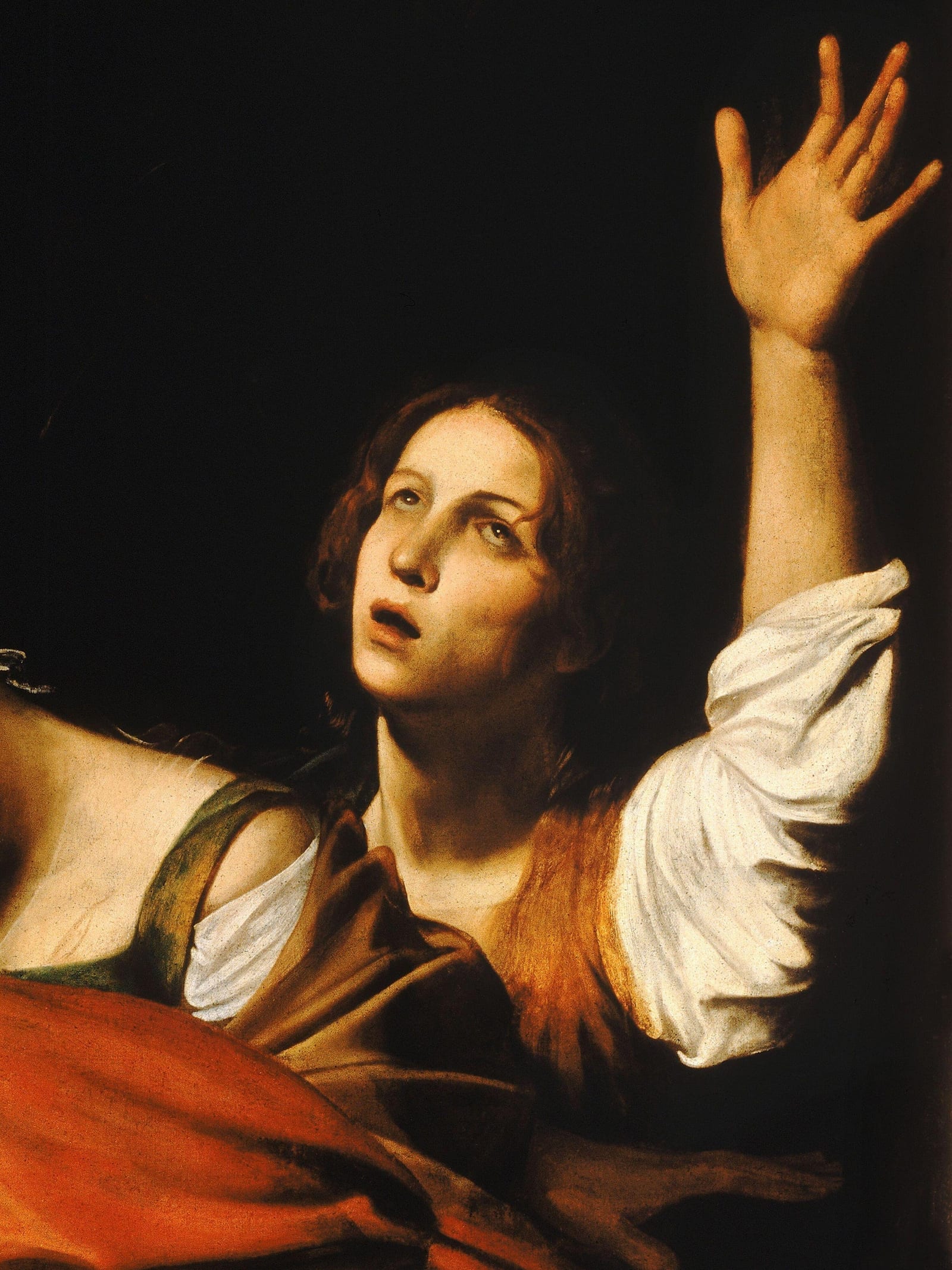
Mary of Cleophas (Greek Maria he tou Klopa) is named by John 19:25 as one of the three women standing at the foot of the Cross beside the Mother of Jesus and Mary Magdalene. She was the wife of Clopas (or Cleopas) and (per Mark 15:40 and Matthew 27:56) the mother of 'James the Less' and Joses. The early Church (Hegesippus, c. AD 165, preserved in Eusebius) identifies Clopas as the brother of St. Joseph, making this Mary an in-law sister of the Blessed Virgin Mary and her sons cousins of the Lord — hence the New Testament references to 'the brethren of the Lord' as cousins rather than siblings.
She is the mother of two of the apostles in the broad sense: 'James the Less' (mentioned in Mark 15:40 and 16:1, distinct from James the Greater son of Zebedee and from James the brother of the Lord first Bishop of Jerusalem — though some traditions conflate the latter two with each other), and Joses (Mark 15:40). With Mary Magdalene and Salome she came to the tomb on Easter morning bearing spices and was among the first witnesses of the empty tomb and of the angelic announcement of the resurrection (Mark 16:1–8).
The Provençal tradition (preserved at the small Camargue town of Saintes-Maries-de-la-Mer at the mouth of the Rhône) holds that Mary of Cleophas, Mary Salome (see her entry), Mary Magdalene, Lazarus, Martha, Maximin, and Sara the Egyptian (the patroness of the Roma) sailed without sail or oar from Palestine to the southern coast of Gaul in the years after the Resurrection, landing at the Camargue marshes. Mary of Cleophas and Mary Salome remained at the Camargue, where their tomb-shrine at Saintes-Maries-de-la-Mer has been a major Catholic and (since the late medieval period) Roma pilgrimage site.