
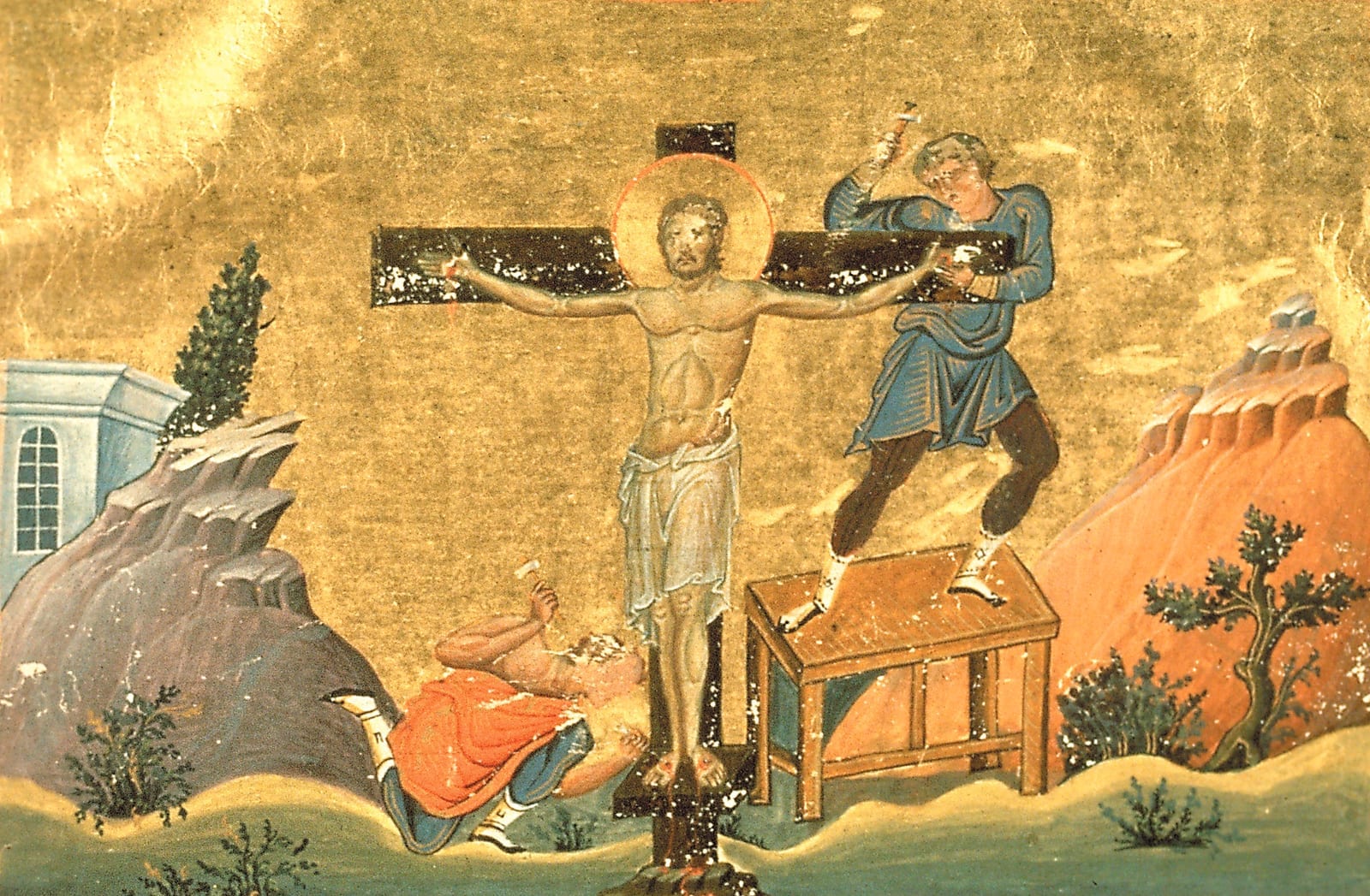
Nestor was Bishop of the small coastal town of Magydus (about ten miles east of the major Pamphylian city of Perga) on the southern coast of Asia Minor. During the Decian persecution of 250–251 — the first formally systematic empire-wide Roman persecution of Christianity, which required every inhabitant of the empire to perform a public pagan sacrifice and obtain a libellus (certificate) — Nestor refused to comply and went voluntarily to the Roman provincial magistrate at Perga to confess his faith openly.
The contemporary Acts of his martyrdom (preserved in Greek) record an extended trial at Perga in which Nestor — fully aware of the death sentence that awaited him — engaged the magistrate in extended theological exchange about the nature of pagan sacrifice and the foundational Christian objection to it. He was condemned to crucifixion and was crucified at Perga around February 251 AD, becoming one of the foundational bishop-martyrs of the Decian persecution.
His example — of a bishop voluntarily going to martyrdom rather than allowing himself to be hunted, in deliberate contradistinction to the contemporary Cyprian of Carthage who withdrew during the persecution and returned to govern his see afterward — became one of the foundational reference points in the early Church's long discussion of legitimate response to persecution (the lapsi controversy, the Novatianist schism, etc.).