
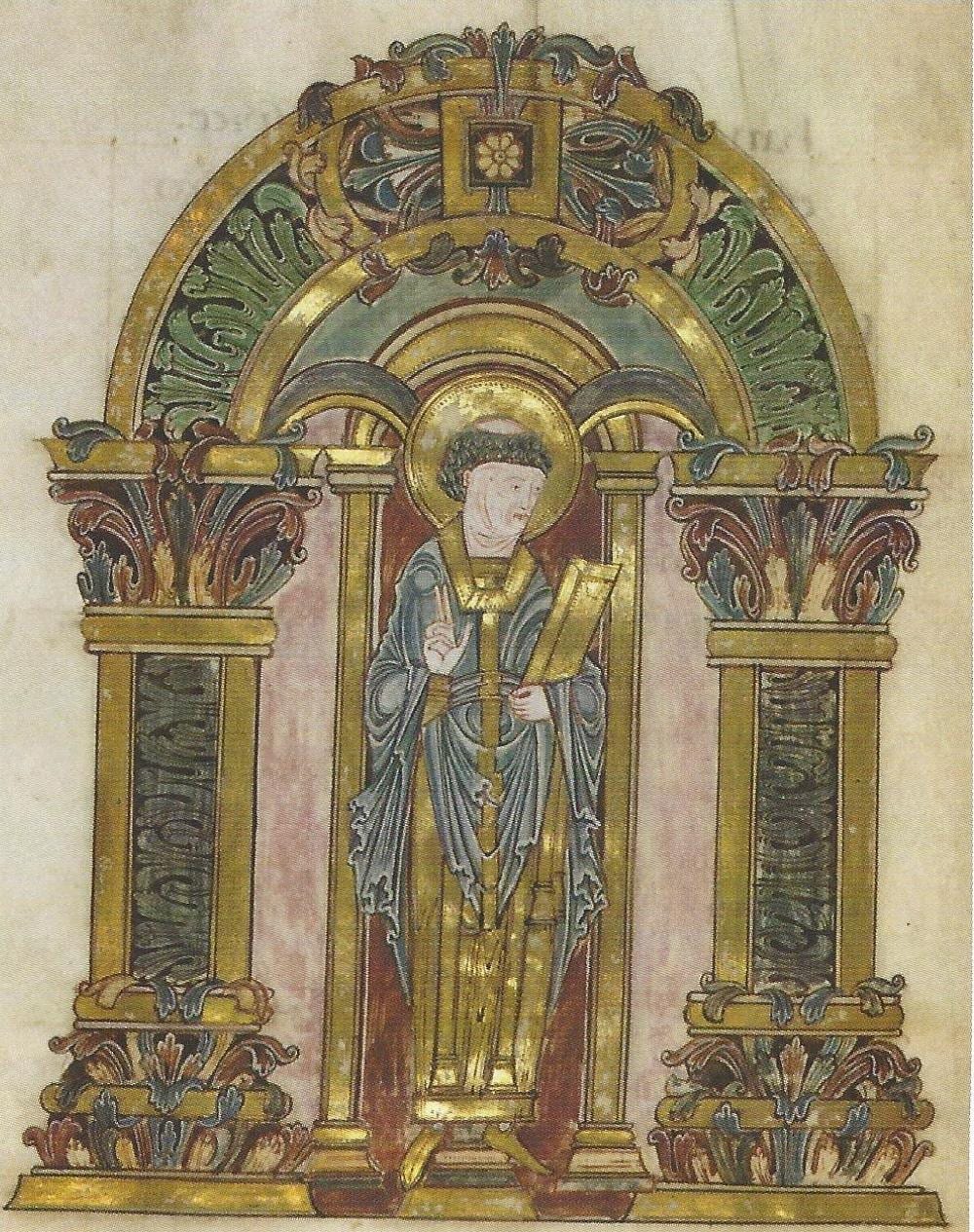
Swithun was tutor to the future King Alfred the Great as a young man, then chaplain to King Egbert of Wessex. Consecrated bishop of Winchester in 852, he ruled the see for ten years. His episcopate coincided with the worst years of Viking invasions; he traveled the kingdom on foot in apostolic poverty, encouraging the faithful and rebuilding churches destroyed by the Northmen.
He asked to be buried in the open churchyard at Winchester, where the rain of heaven might fall on him and the footsteps of the people pass over him. When his successors translated him into the new cathedral in 971 — over a hundred years after his death — a great storm broke as the procession began and continued for forty days. This is the origin of the English folk-tradition: 'St. Swithun's Day, if thou dost rain, for forty days it will remain; St. Swithun's Day, if thou be fair, for forty days 'twill rain no more.'
His shrine at Winchester was one of the great pilgrimage sites of medieval England until its destruction at the Reformation. The cathedral that houses his memory is one of the supreme masterpieces of Norman and Gothic architecture in the country.