
Nine days of persevering prayer — the pattern the Apostles set in the upper room
Prayer sustained over nine consecutive days for a particular intention: the oldest and most flexible form of Catholic petition, modelled on the nine days the Apostles and Mary spent in prayer between the Ascension and Pentecost.
The first novena
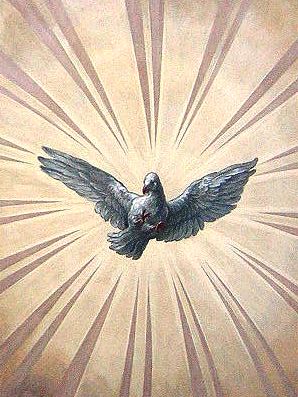
'Then they returned to Jerusalem… All these were persevering with one mind in prayer with the women, and Mary the mother of Jesus, and with his brethren' (Acts 1:12–14). Between the Ascension and Pentecost there are nine days, and the Church has always read that interval as the pattern: the disciples did not go out and begin work, they waited and prayed together, and on the ninth day the Holy Spirit came.
Every novena since is an imitation of those nine days. That is also why the promise attached to novenas is never mechanical: what the Apostles received was not what they asked for in a list, but the Spirit Himself.
How the practice spread
The nine-day shape had a second root in the Roman world, where the <em>novemdiales</em> were nine days of mourning and rites following a death. Early Christians in Spain and Gaul adapted the custom into nine days of preparation before Christmas, and from the seventh century onward the form spread: novenas of preparation before a feast, novenas of mourning for the dead, and — latest and now most common — novenas of petition to a saint for a particular need.
By the seventeenth and eighteenth centuries almost every religious order had its novenas, and the printing press carried them into ordinary households. The Christmas novena, the Pentecost novena, and the Novena of Grace to St. Francis Xavier (March 4 to 12, the nine days ending on his feast) are among the oldest still widely kept.
What a novena is not
The Church's caution here is not fussiness; it protects the prayer from becoming its opposite. A novena is not a formula that compels God, and no novena is 'never known to fail' — a phrase that appears on a great many leaflets and has no standing whatever. Any text that requires you to copy it, publish it, or pass it to nine other people is a chain letter wearing devotional clothes, and the promise attached to it is worth exactly what the sender paid for it.
The perseverance is the point. Nine days of asking for the same thing does not change God's mind; it changes the person asking — it turns an impulse into a petition, and it teaches the soul to keep knocking (Luke 11:5–13). And a novena that is answered with a no has still been answered: the Apostles' nine days ended with a gift none of them had thought to request.
Living the Devotion
- 1.Choose one intention and keep to it for the nine days; a novena scattered across many petitions is really nine separate prayers.
- 2.Keep the same time of day if you can — the fixed hour does more for perseverance than the fixed words.
- 3.Pray it as preparation before a feast, in petition to a saint, or in mourning for the dead; all three are ancient forms.
- 4.If a day is missed, begin again rather than counting it; the practice is perseverance, and there is no penalty for starting over.
- 5.The great novena to make first is the original: the nine days from Ascension to Pentecost, asking for the Holy Spirit.
In the Words of the Popes
"Popular devotions must be so drawn up that they harmonize with the sacred liturgy, are in some way derived from it, and lead the people to it."