
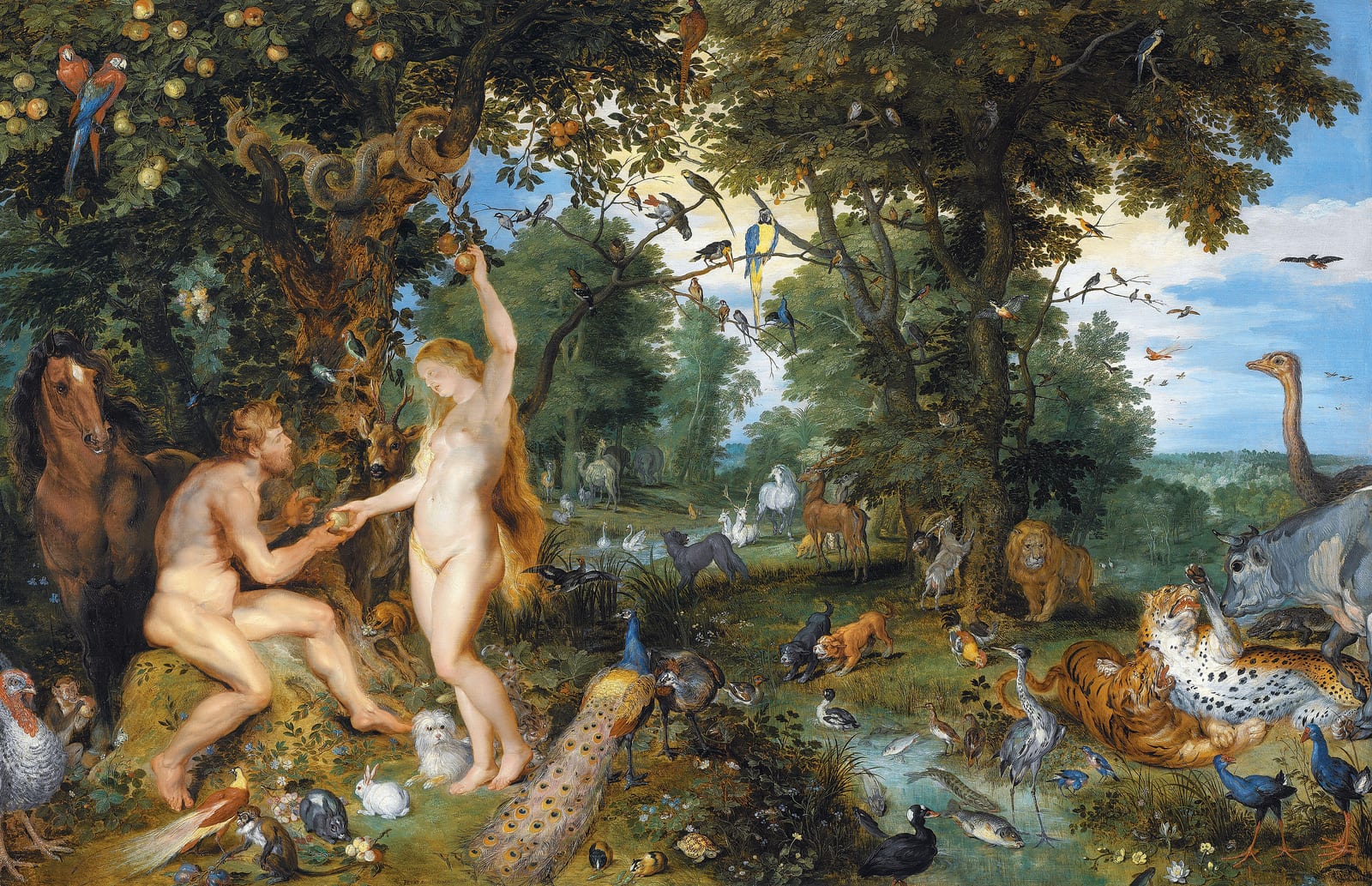
The sin of Adam is transmitted to all his descendants not by imitation but by propagation, and is proper to each — a deprivation of the original holiness in which man was created. It is taken away by the merit of Christ, applied in Baptism.
“If anyone asserts that this sin of Adam… is taken away either by the powers of human nature or by any remedy other than the merit of the one mediator, our Lord Jesus Christ… or denies that the merit of Jesus Christ is applied to adults and to infants alike through the sacrament of baptism rightly conferred in the form of the Church, let him be anathema.”
Solemnly defined by an ecumenical council or by a pope teaching ex cathedra. The wording of the definition itself is what binds, and it cannot be reversed.
The Scripture it rests on
“Wherefore as by one man sin entered into this world, and by sin death; and so death passed upon all men, in whom all have sinned.”
Romans 5:12 →“For behold I was conceived in iniquities; and in sins did my mother conceive me.”
Psalms 50:7 →Pelagius, and the doctrine nobody wants
The British monk Pelagius, teaching in Rome around 400, held that human nature was undamaged: with effort and good example, a person could keep the commandments and be saved. Grace helped, but was not strictly necessary. It is the most humane-sounding heresy ever proposed, and St. Augustine spent the last twenty years of his life fighting it.
His objection was not pessimism about people. It was that Pelagius's view made the Cross unnecessary — if we can climb out ourselves, then Christ died to demonstrate something rather than to rescue anyone. The Church condemned Pelagianism at Carthage in 418 and at the Council of Orange in 529, and Trent restated the whole matter in 1546 against a Reformation that had swung to the opposite extreme.
What is actually inherited
The Catechism is careful here, and its care answers most of the objection. Original sin is called sin 'in an analogical sense': it is a sin contracted, not committed — a state, not an act. No one is personally guilty of what Adam did. What is inherited is a deprivation: human nature without the original holiness it was made to have, and consequently weakened, ignorant, subject to suffering and death, and inclined to sin.
That inclination — concupiscence — remains even after Baptism, and Trent says so explicitly: Baptism removes the guilt, not the struggle. This is why the doctrine, far from being gloomy, is the most experimentally verifiable thing the Church teaches. Chesterton called it the only part of Christian theology which can really be proved.
What it does not mean
A great deal of what people believe the Church teaches, and reject, is something she has never taught.
Babies are personally guilty of a sin they did not commit.
No. Original sin is contracted, not committed; no one bears personal guilt for Adam's act. What is inherited is the loss of a gift, not a criminal record.
Human nature is totally corrupt and can do nothing good.
Trent rejected that too. Nature is wounded, not destroyed; the image of God in man is damaged but not erased, and unbaptized people are plainly capable of real goodness.
Unbaptized infants go to hell.
The Church has never taught this as doctrine. Limbo was a theological hypothesis, never a dogma. The Catechism entrusts such children to the mercy of God and notes the Church's great hope for their salvation.
Why it matters
- ✂It explains the gap everyone notices between the person they mean to be and the person they are, without concluding that they are worthless.
- ✂It means your failures are a wound to be healed rather than a verdict on your identity.
- ✂It is why Baptism is not a naming ceremony but a rescue — and why the Church baptizes infants, who did nothing to earn it, which is rather the point.