
There is a purgatory, and the souls detained there are helped by the prayers of the faithful and above all by the sacrifice of the Mass. Everyone in purgatory is going to heaven; the purification is of those already saved.
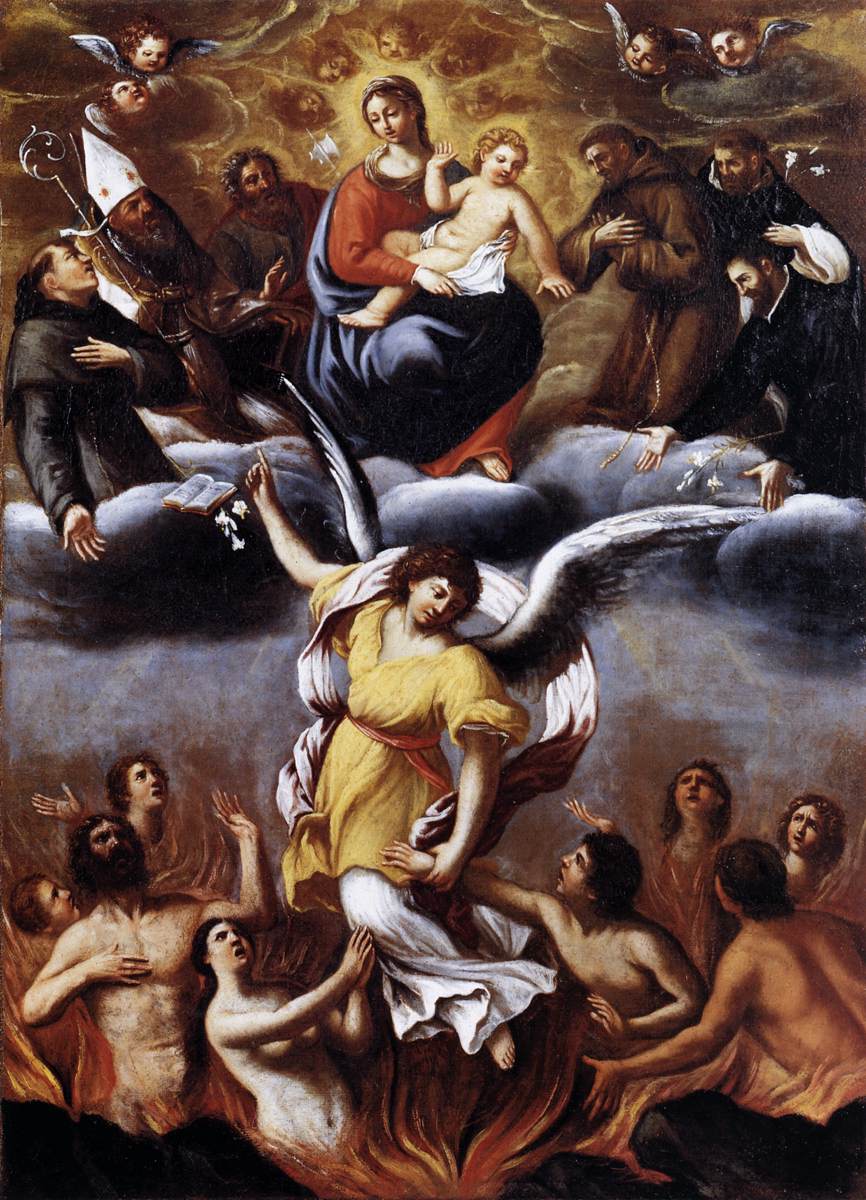
“The Catholic Church, instructed by the Holy Spirit, has from the Sacred Scriptures and the ancient tradition of the Fathers taught in sacred councils and very recently in this ecumenical Council that there is a purgatory, and that the souls there detained are helped by the suffrages of the faithful, but principally by the acceptable sacrifice of the altar.”
Solemnly defined by an ecumenical council or by a pope teaching ex cathedra. The wording of the definition itself is what binds, and it cannot be reversed.
The Scripture it rests on
“It is therefore a holy and wholesome thought to pray for the dead, that they may be loosed from sins.”
2 Maccabees 12:46 →“If any man's work burn, he shall suffer loss; but he himself shall be saved, yet so as by fire.”
1 Corinthians 3:15 →“It shall not be forgiven him, neither in this world, nor in the world to come.”
Matthew 12:32 →Older than the word
The noun purgatorium is medieval; the practice it names is not. The catacombs are full of second- and third-century inscriptions asking prayer for the dead — in pace, and requests for refreshment and light. St. Monica, dying at Ostia in 387, asked only one thing of her son Augustine: 'Lay this body anywhere, let not the care of it trouble you at all. This only I ask, that you will remember me at the Lord's altar, wherever you be.'
That request is the doctrine in miniature. If the dead go straight to heaven, prayer for them is superfluous; if they go to hell, it is useless. Christians have prayed for their dead since the beginning, which means Christians have always believed in something like purgatory, whatever they called it.
What the Church has not defined
The definitions are notably restrained. Trent defined that purgatory exists and that the dead are helped by our prayers, and in the same breath instructed bishops to exclude from popular preaching 'the more difficult and subtle questions' and anything 'which savours of curiosity or superstition'. The Church has never defined that purgatory is a place, that it involves physical fire, or that it lasts a measurable length of time — the medieval imagery of days and years attaches to indulgences, not to the doctrine.
What is defined is smaller and warmer than the folklore: some who die in God's friendship are not yet ready to see Him, and God finishes what He started.
What it does not mean
A great deal of what people believe the Church teaches, and reject, is something she has never taught.
Purgatory is a second chance for people who died outside God's friendship.
There are no second chances there, because there is no one in purgatory who is not already saved. It is the antechamber of heaven, not an appeals court.
It is a lesser hell, where God punishes people before letting them in.
It is purification, not retribution. The classical image is not a courtroom but a fire that burns off what cannot enter heaven — and the souls there are described by the tradition as suffering and joyful at once, because they know where they are going.
Catholics believe you can buy your way out of it.
The sale of indulgences was a real abuse, condemned by the same Council of Trent that defined the doctrine — it forbade all financial gain from indulgences outright in 1567. An indulgence has never been purchasable in the Church's law, and prayer for the dead has never cost anything.
Why it matters
- ♨It means love does not stop at the grave: you can still do something for the people you have lost, this afternoon.
- ♨It takes both holiness and mercy seriously — nothing unclean enters heaven, and God will not let that stop Him getting you there.
- ♨It is why November, and why the Mass is offered for the dead, and why a Catholic funeral prays for the person rather than simply about them.