
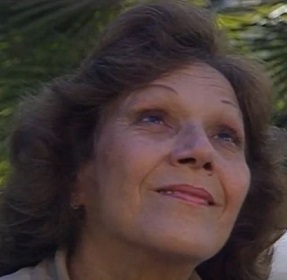
María Esperanza Medrano de Bianchini (1928–2004), a Venezuelan wife and mother of seven, Franciscan tertiary, and mystic with a long record of mystical experiences, purchased the Finca Betania — a farm with a grotto and a spring outside Cúa, southwest of Caracas — in 1974. On 25 March 1976, the feast of the Annunciation, the Blessed Virgin appeared to her there for the first time under the title 'María Reconciliadora de los Pueblos y las Naciones' — Mary, Virgin and Mother, Reconciler of Peoples and Nations.
Over the next fourteen years the apparition recurred at Betania hundreds of times, often before large groups. On 25 March 1984 — the eighth anniversary — before a crowd gathered at the grotto, the Virgin appeared repeatedly through the afternoon above the waterfall on the property and was seen, by their sworn testimony, by 108 people of every age and condition. Their depositions, gathered by the diocese of Los Teques, are unusual in Marian apparition literature: nearly all report the same time-frame (about forty minutes) and the same visual details, including the colour of the mantle and the position of the hands.
Bishop Pío Bello Ricardo of Los Teques, a Jesuit with a doctorate in psychology, chose to conduct the inquiry himself rather than through a commission, and over five years took some 380 written statements from nearly 500 witnesses. On 21 November 1987, having consulted the Congregation for the Doctrine of the Faith under Cardinal Ratzinger, he issued a pastoral instruction declaring the apparitions 'authentic and of supernatural character' and authorising the devotion. On 8 December 1991 he authorised public veneration and the sanctuary; a Marian shrine has since been built on the property.
María Esperanza died in 2004; her cause for beatification was opened in 2010. Documented healings continue at the site, including several reported to the diocesan tribunal since 2000. Betania is counted among the very few Marian apparitions approved as supernatural during the twentieth century.