
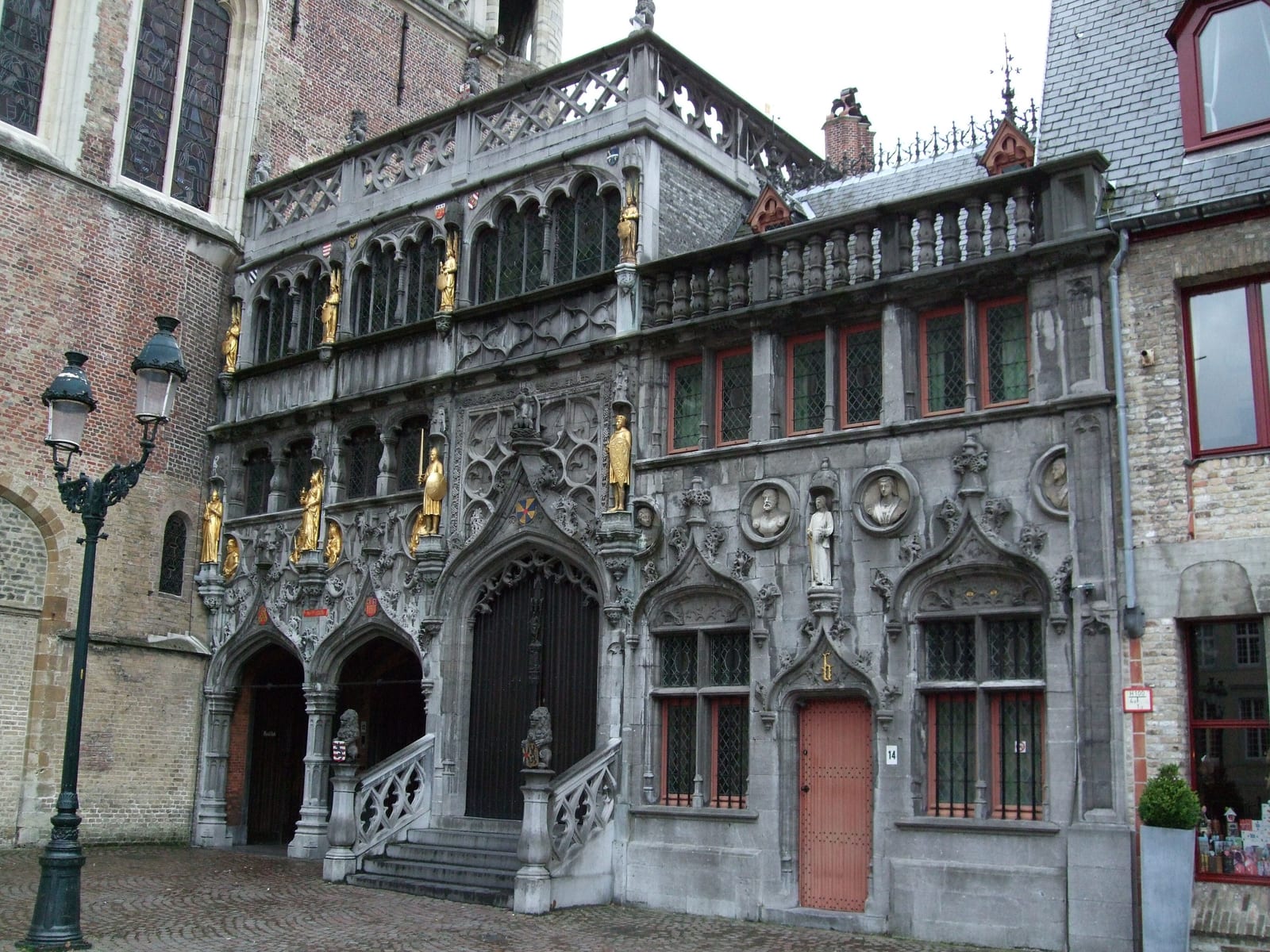
According to tradition, the Holy Blood relic of Bruges was gathered by St. Joseph of Arimathea at Calvary, brought eventually to the imperial chapel at Constantinople, and given by the Byzantine emperor to Count Thierry of Alsace at the close of the Second Crusade in 1149/50. The count brought it back to Bruges in 1150 and built the upper chapel — the Basilica of the Holy Blood, beside the Burg of Bruges — to house it.
The relic, a small vial of dried blood adhering to a piece of cloth, has been venerated continuously since. The annual Holy Blood Procession (Heilig Bloed Processie) through the streets of Bruges, dating from 1304, is one of the great living medieval Eucharistic processions of Europe; it has been recognised by UNESCO as Intangible Cultural Heritage of Humanity.