
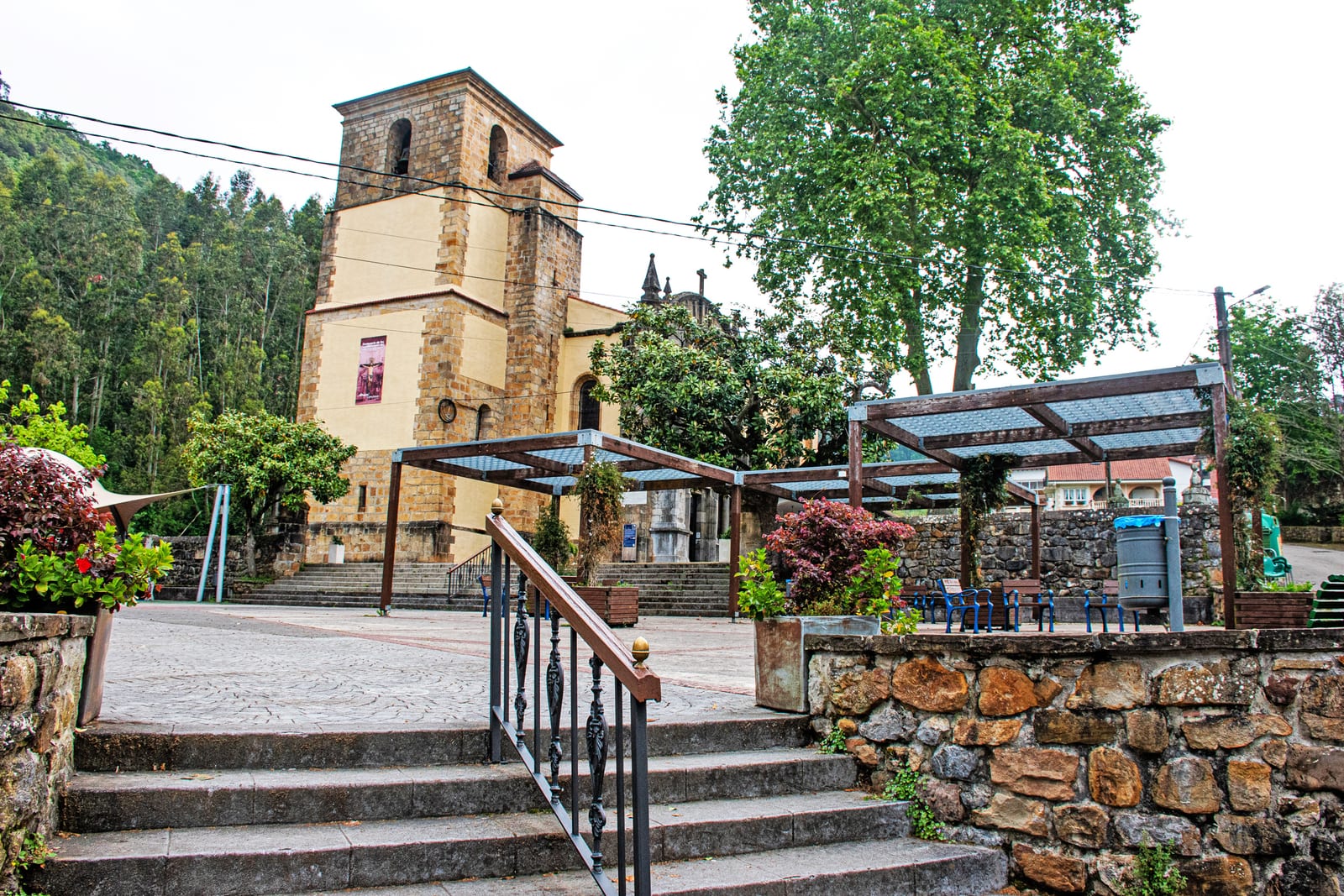
In late March 1919, two Capuchin friars from Santander — Fathers Anselmo of Jalón and Agatángelo of San Miguel — gave a parish mission at San Pedro of Limpias, a small Cantabrian town whose parish church houses a life-sized wooden crucifix carved about 1690, attributed to the Sevillian sculptor Pedro de Mena's circle.
On the closing day of the mission, March 30, 1919, a twelve-year-old girl named Angeles Aguerra told the celebrant that the eyes of the Christ on the altar were moving. Others in the church confirmed it. Over the following four months more than eight thousand people from all across Spain and Europe deposited before the parish priest and the notary detailed accounts: the eyes of the corpus opened and closed; the head bowed; blood appeared and then disappeared from the wounds; the mouth moved as though in speech; sweat was seen on the brow.
Bishop Vicente Santiago Sánchez de Castro of Santander opened a formal canonical inquiry. On May 12, 1921, he authorized public veneration of the crucifix under the title 'The Most Holy Christ of the Agony of Limpias'. The eight thousand depositions — including those of physicians, engineers, and priests — were bound and are preserved in the diocesan archive. The crucifix remains above the high altar of the parish church.