
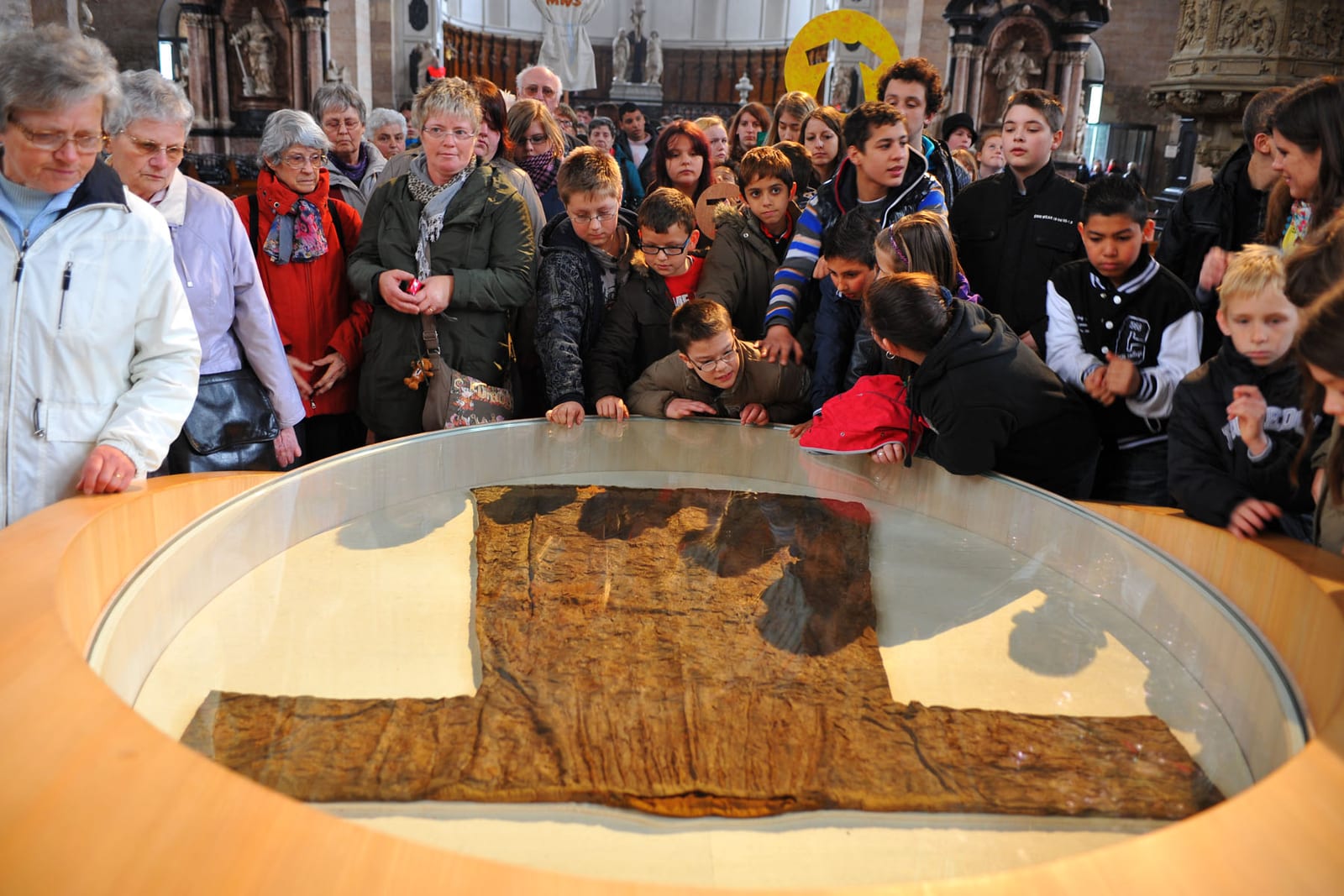
Among the relics gathered by St. Helena, mother of Constantine, on her great expedition to the Holy Land around AD 326–328 is the seamless tunic of Christ — described in John 19:23–24 as the one garment 'without seam, woven from top to bottom,' for which the Roman soldiers cast lots at the foot of the Cross rather than divide it. Helena, who was a German native of Drepanum (renamed Helenopolis), gave the relic to the Cathedral of her German imperial capital at Trier.
The Holy Coat (Heilig-Rock) of Trier has been preserved in a sealed reliquary at Trier Cathedral for nearly seventeen centuries. It is exposed for public veneration only on rare occasions — historically every twenty to fifty years, most recently in 1959, 1996, and 2012, drawing two million pilgrims to Trier on each occasion. The relic was examined by textile experts in the 19th and 20th centuries; the surviving fabric is consistent with 1st-century weaving but has been repeatedly stitched and reinforced over the centuries, complicating definitive analysis.