
At the end, all the dead will rise again with their own bodies, the same bodies they now bear, to receive according to their works; and the souls of the just already see God face to face before that day.
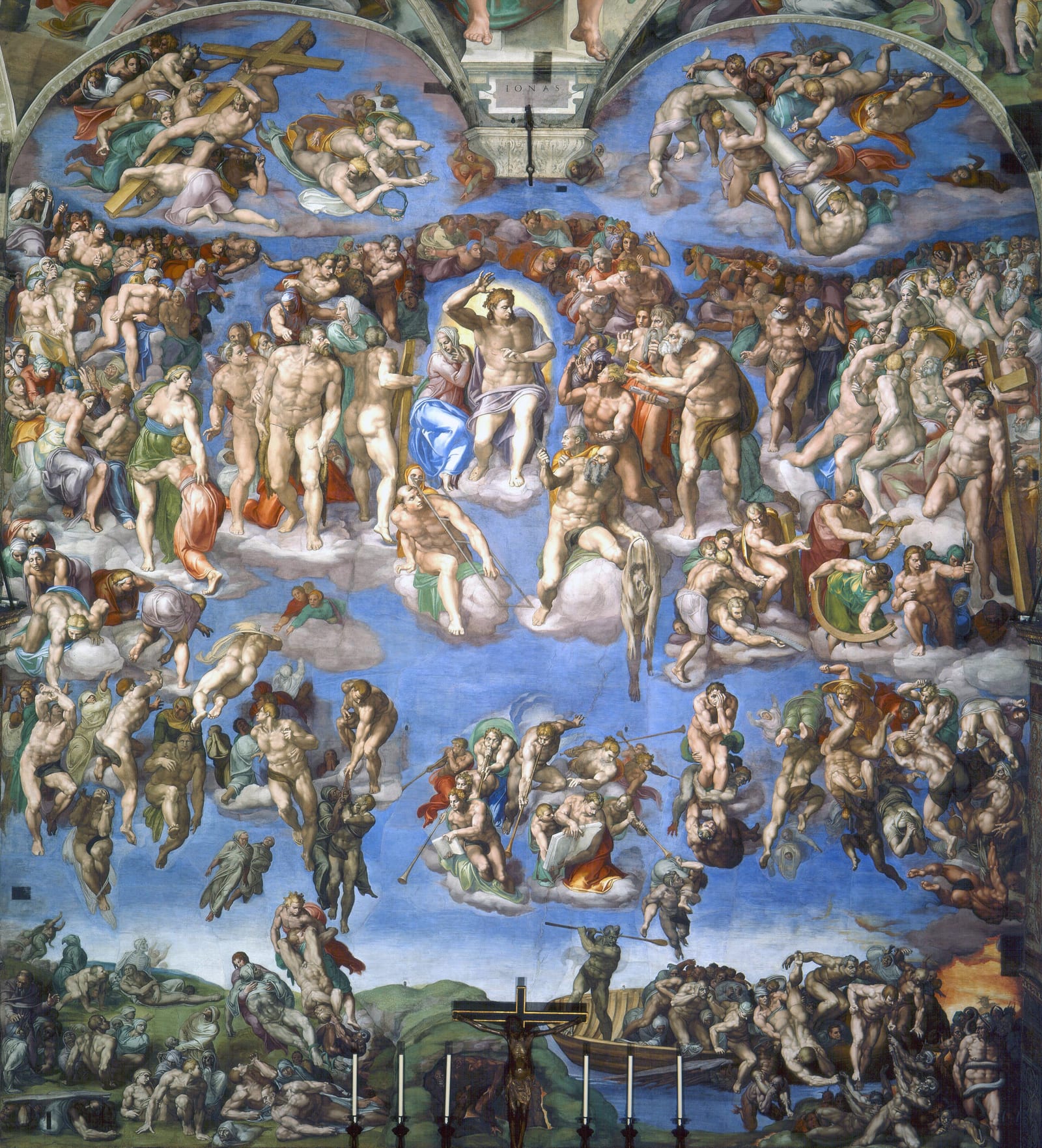
“All of them will rise with their own bodies, which they now wear, so as to receive according to their deserts, whether these be good or bad.”
Solemnly defined by an ecumenical council or by a pope teaching ex cathedra. The wording of the definition itself is what binds, and it cannot be reversed.
The Scripture it rests on
“For I know that my Redeemer liveth, and in the last day I shall rise out of the earth. And I shall be clothed again with my skin, and in my flesh I shall see my God.”
Job 19:25 →“For this corruptible must put on incorruption; and this mortal must put on immortality.”
1 Corinthians 15:53 →“The hour cometh, wherein all that are in the graves shall hear the voice of the Son of God. And they that have done good things, shall come forth unto the resurrection of life.”
John 5:28-29 →The doctrine the ancient world found ridiculous
Greek philosophy could accept the immortality of the soul without much difficulty; that idea was respectable. What it could not take seriously was the resurrection of the body, which struck an educated Athenian as grotesque — the soul's escape from the body was the whole point of salvation, not its return to one. When St. Paul reached this part of his speech at the Areopagus, Acts records that some mocked and the meeting broke up.
The Church nevertheless put it in the Creed and left it there. Christianity has never taught that you are a soul who has a body; it teaches that you are a body and a soul together, that death tears the two apart, and that this is an outrage which God intends to reverse.
Two moments, not one
There are two judgments and they are easily confused. The particular judgment happens at death, and Benedict XII defined in 1336 that the souls of the just, fully purified, see God face to face immediately — they do not sleep until the end of the world. The general judgment happens at the last day, when the dead rise bodily and the whole story is made public.
Why both? Because a person is not only a private soul: we live in bodies, in families, in history, and the consequences of a life run on long after it ends. The general judgment is where all of that is finally seen for what it was.
What it does not mean
A great deal of what people believe the Church teaches, and reject, is something she has never taught.
We become angels, or pure spirits, when we die.
We do not. Angels are a different order of creature and always were. The Christian hope is embodied, and the body we are promised is our own.
It means the resuscitation of the corpse exactly as it was, so cremation or a body lost at sea would prevent it.
No. The risen body is the same body, glorified and no longer subject to death, and the Church has permitted cremation since 1963. Not a single Father ever thought God's power was limited by what happened to the remains — the martyrs were burned and scattered on purpose.
Why it matters
- ⌇It is why the Church treats a dead body with reverence, and why cemeteries are blessed ground.
- ⌇It means what you do with your body — work, suffering, chastity, care for the sick — is not a temporary arrangement but part of what will be raised.
- ⌇It is the answer to the fear that death is the last word about someone you loved. It is not even the last word about their body.