
The devotion Our Lady came to Fátima to establish — and the one the popes answered
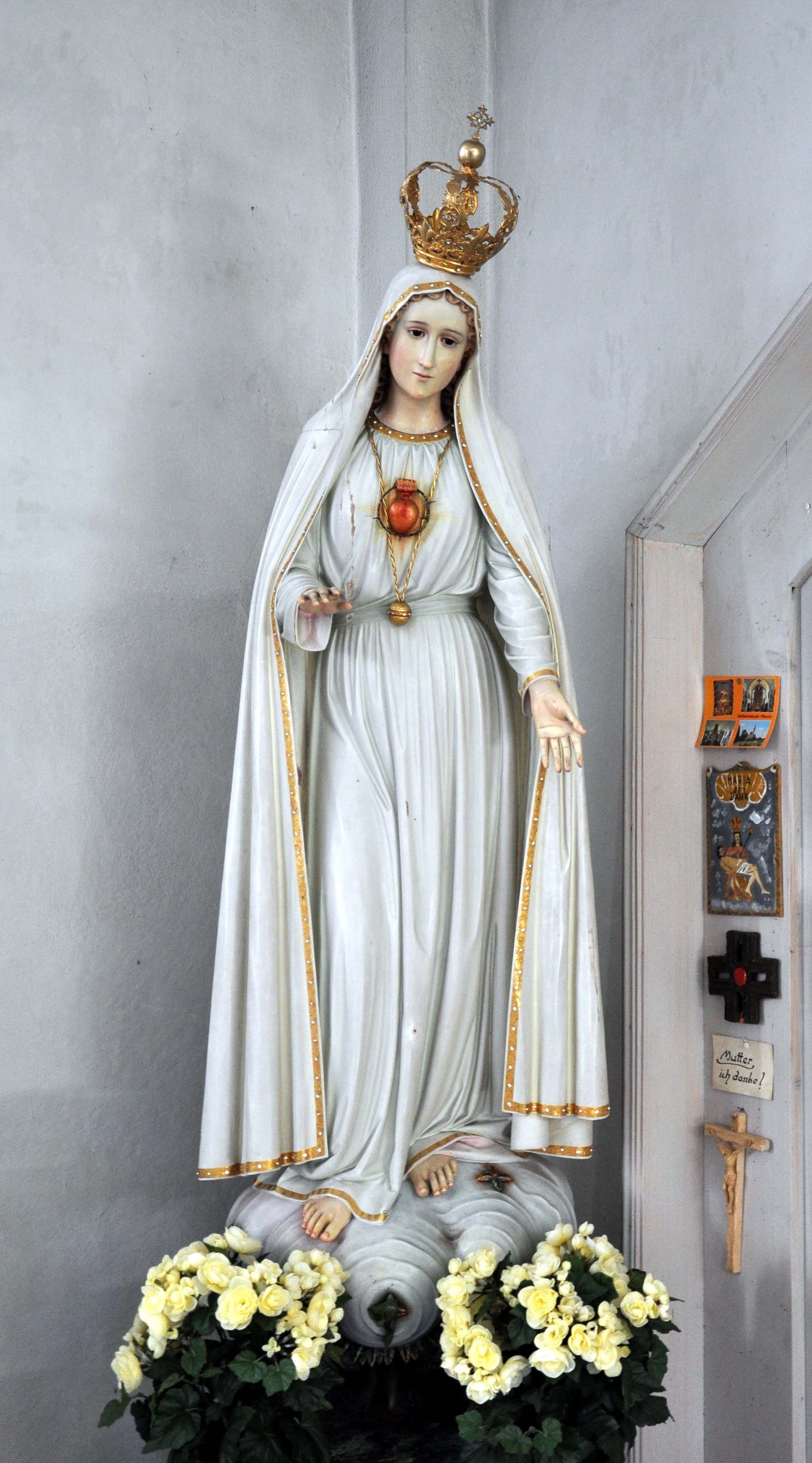
Devotion to the heart of Mary — her interior life, wholly given to God — is older than Fátima by centuries, but Fátima made it the Church's answer to the twentieth century: 'God wishes to establish in the world devotion to my Immaculate Heart.' Pius XII consecrated the world to it in 1942 and gave it a feast in 1944.
The heart in Luke's Gospel
The devotion begins in the text. Three times Luke turns to Mary's heart: after the shepherds, 'Mary kept all these words, pondering them in her heart' (Luke 2:19); at the Presentation, Simeon's prophecy that 'thy own soul a sword shall pierce' (Luke 2:35); and after the finding in the Temple, 'his mother kept all these words in her heart' (Luke 2:51). The heart, in Scripture, is the whole interior person — mind, memory, will and love — and Mary's is the one human heart that never refused God anything.
'Immaculate' names why: conceived without original sin, her heart was never divided. Devotion to it is not devotion to an organ or a symbol but to the interior life of the woman whose yes made the Incarnation possible, and to the love with which she still says it.
Saint John Eudes, 1648
The first public feast of the Heart of Mary was kept on 8 February 1648 at Autun, in Burgundy, during a mission preached by Saint John Eudes, who had made the twin Hearts of Jesus and Mary the centre of his priestly life and would write, in The Admirable Heart of Mary, the first full theology of the devotion. Rome approved it locally, and in 1805 Pius VII allowed a feast of the Most Pure Heart of Mary to any diocese that asked.
In 1830 the devotion received an image. Our Lady showed Saint Catherine Labouré at the Rue du Bac the design of the Miraculous Medal, and on its reverse the two Hearts side by side — one crowned with thorns, one pierced by a sword — beneath the cross and the M. A hundred million medals later, it is the picture most Catholics carry of the Immaculate Heart.
Fátima, and the answer of the popes
On 13 June 1917 the three children saw, before Our Lady's right hand, a heart encircled by thorns; and on 13 July they were told what the vision of hell was for: 'To save them, God wishes to establish in the world devotion to my Immaculate Heart.' The Five First Saturdays and the consecration of Russia are both, in the message's own words, acts of reparation and entrustment to that Heart. 'In the end,' she said, 'my Immaculate Heart will triumph.'
The Church answered. On 31 October 1942, in the middle of the war, Pius XII consecrated the human race to the Immaculate Heart, and on 4 May 1944 he extended its feast to the whole Church, fixing it on 22 August, the octave of the Assumption, 'that by her intercession may be obtained peace among nations, freedom for the Church, the conversion of sinners, the love of purity and the practice of virtue.' In 1969 Paul VI moved it to the Saturday after the Sacred Heart, so that the two Hearts are kept together. John Paul II consecrated the world to it at Fátima in 1982 and with the bishops of the world in 1984; Francis, on 25 March 2022, named Russia and Ukraine.
The Promises
Two promises, both from Fátima, both recorded by Sister Lúcia.
"My Immaculate Heart will be your refuge and the way that will lead you to God."
Fátima was declared worthy of belief in 1930. The words are Lúcia's record of a private revelation, which the Church permits the faithful to believe and does not oblige them to.
"In the end, my Immaculate Heart will triumph."
Benedict XVI, at Fátima in 2010, prayed that the years to the centenary would 'hasten the fulfilment of the prophecy of the triumph of the Immaculate Heart of Mary.' The Church has never defined what the triumph will look like.
Living the Devotion
- 1.Consecrate yourself to the Immaculate Heart — the Act of Consecration is on this site — and renew it; consecration is the devotion's heart, and everything else flows from it.
- 2.Keep the Five First Saturdays: confession, Communion, five decades of the Rosary and fifteen minutes' meditation, in reparation.
- 3.Wear the brown scapular as the sign of that consecration, as the Blue Army pledge puts it, and pray the Rosary daily.
- 4.Keep the feast — the Saturday after the Sacred Heart — and the month of August, traditionally given to the Immaculate Heart.
In the Words of the Popes
"That by her intercession may be obtained peace among nations, freedom for the Church, the conversion of sinners, the love of purity and the practice of virtue."
"Offering to implant in the hearts of all those who trust in her the Love of God burning in her own heart."
"Mother of God and our Mother, to your Immaculate Heart we solemnly entrust and consecrate ourselves, the Church and all humanity, especially Russia and Ukraine."